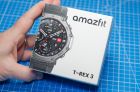
Amazfit Active Max Review – Bigger, Better, and More Expensive
As recently as February 2025, Amazfit launched the Active 2, a smartwatch with one of the strongest price-to-performance ratios currently available. Now, Amazfit is doubling down with the Active Max – the larger, more ambitious sibling of the Active 2. That alone makes it worth a closer look, especially since the Active 2 itself never made it onto my wrist.
Active Max in comparison
The Active Max is part of Amazfit’s Active series, but it does not represent a standalone generation within the product line. From my point of view, it’s a variant of the Active 2 with sensible enhancements and size-related adjustments. Accordingly, the watch primarily has to stand comparison with the Active 2.
| Active Max | Active 2 | Balance 2 | |
|---|---|---|---|
| Display | AMOLED | AMOLED | AMOLED |
| Display size | 1.50" | 1.32" | 1.50" |
| Resolution | PPI | 480 × 480 | 320 | 466 × 466 | 353 | 480 × 480 | 320 |
| Brightness (max) | 3,000 Nits | 2,000 Nits | 2,000 Nits |
| Dimensions | 48.5 × 48.5 × 12.2 mm | 43.9 × 43.9 × 9.9 mm | 47.4 × 47.4 × 12.3 mm |
| Weight | 39 g without strap | 30 g without strap | 43 g without strap |
| Wasserdichtigkeit | 5 ATM | 5 ATM | 10 ATM |
| Material (bezel) | Aluminium | Stainless Steel | Aluminium |
| Material (case) | Plastic (no further details provided) | Plastic (no further details provided) | Aluminium |
For better context, I have also compared both models with the Balance 2.
New and noteworthy features of the Amazfit Active Max
The most important new features of the Active Max are:
1.5″ AMOLED display
The most noticeable difference compared to the Active 2 is the fairly large 1.5″ AMOLED display, which likely also inspired the name of the smartwatch. Compared to the 1.32″ display of the Active 2, the resolution increases from 466 × 466 to 480 × 480 pixels.
As a result, pixel density comes in at 320 PPI, which is slightly lower than the 353 PPI of the Active 2. In everyday use, differences at this high level are not noticeable.
3,000 nits / automatic adjustment
In addition to the display size, Amazfit has also increased the maximum display brightness. At up to 3,000 nits, the Active Max display shines just as brightly as that of the T-Rex 3 Pro and up to 50% brighter than the Active 2 and Balance 2. In order to save energy the maximum brightness won’t be used if the battery level is below 30%.
Even in direct sunlight, the display remains easy to read. In low-light conditions, automatic brightness adjustment ensures that the display doesn’t glare while also conserving battery life.
Offline maps
One of the big advantages in this price range is the use of offline maps that can be loaded onto the watch via the Zepp app. Officially, the watch has 4 GB of storage available, with 1,3 GB already taken by the OS.
Unlike the Active 2, the Active Max features not only basic and ski maps, but also contour maps (i.e. maps with elevation lines). Since routes can also be transferred to the watch, turn-by-turn directions make it possible to navigate unfamiliar paths with confidence.
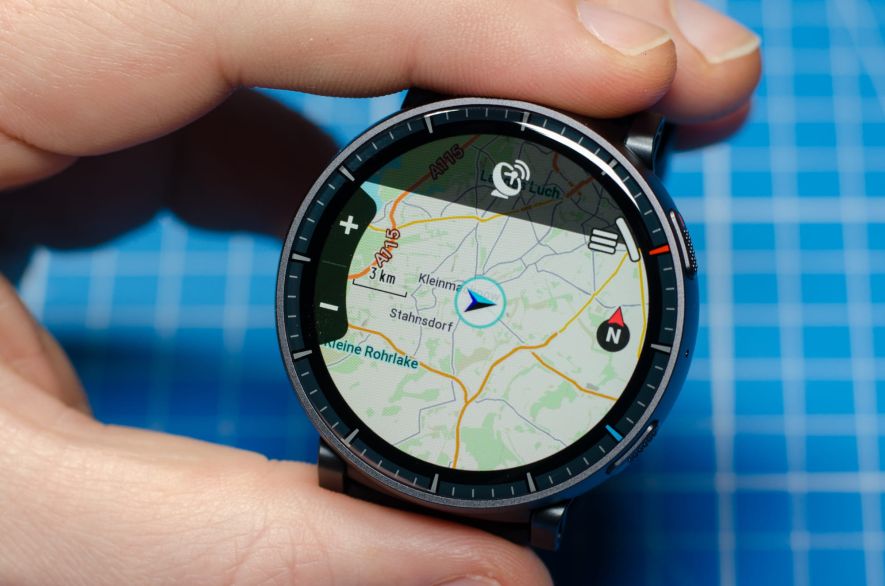
Offline maps in light mode
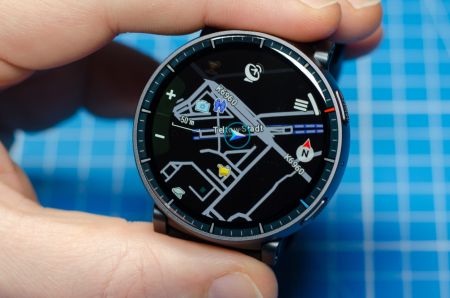
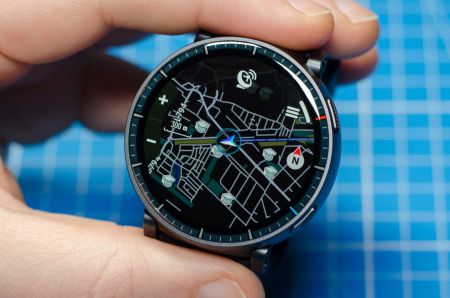
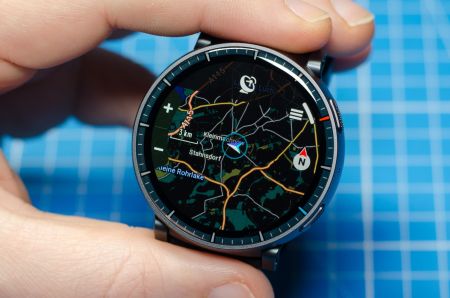
Planning routes directly on the watch is not possible. However, creating routes in the Zepp app works quite easily. In addition, routes from Komoot can be imported into the Zepp app without any issues.
A downside is that the Active Max does not support Wi-Fi, so map data has to be transferred to the watch via Bluetooth. Given Bluetooth’s limited bandwidth, this can sometimes test your patience.
As with all other models, only one map section can be stored on the watch at a time. This is definitely an area where Amazfit could improve.
Podcasts
With Zepp OS 5, the podcast app was introduced on the Balance 2 and T-Rex 3 Pro. Amazfit has also announced the app for the Active Max, but I was unable to find it either in the Zepp app or on the watch itself.
Update: Meanwhile it’s clear that the podcast app will be added with the next major firmware update.
Still, its current absence is a bit disappointing, as I would have liked to see how quickly podcasts can be transferred to the watch. Due to the lack of Wi-Fi, transfers would also have to be done via Bluetooth, which is known to be significantly slower than Wi-Fi — and even on the Balance 2, transfer speeds are not among the fastest.
160+ sports modes
According to Amazfit, activities from more than 160 sports can be tracked. Without a doubt, the Active Max offers a wide variety of sports profiles, but in my view, much of this is more marketing than substance. Decide for yourself, how useful it is to track card games, board games, or driving. For many other sports, wearing a watch is often not desired — or even prohibited.
That said, pretty much all competitors handle this similarly, because it’s easy to market. What really matters is that the key indoor and outdoor sports are supported. Trend sports such as HYROX, both for training and competition, are also included.
And for anyone whose self-discipline took a hit after Christmas, Amazfit’s AI Coach can provide a bit of motivation to get back into an active routine.
AI coaching
A free personal trainer comes in the form of Amazfit’s AI Coach. In combination with the app, it creates training plans tailored to the user’s current fitness level.
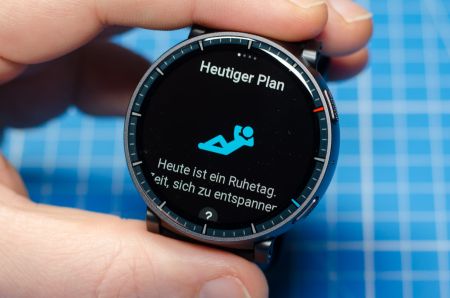
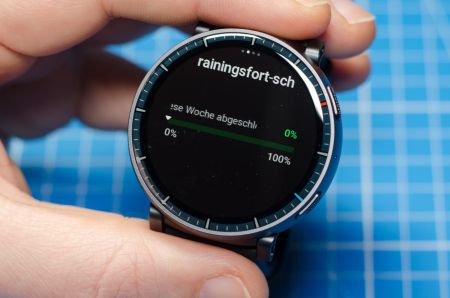
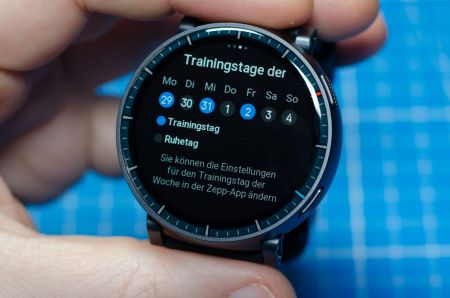
Especially for beginners who want to make their daily lives more active, it would be nice if fewer than three training days per week could be planned. Between work and family life, everything needs careful scheduling, and it’s often easier when workouts are recurring appointments. Even so, the entry barrier could still be lower.
And what if you miss a training day? No problem at all — the watch notes it, but beyond that, there are no consequences.
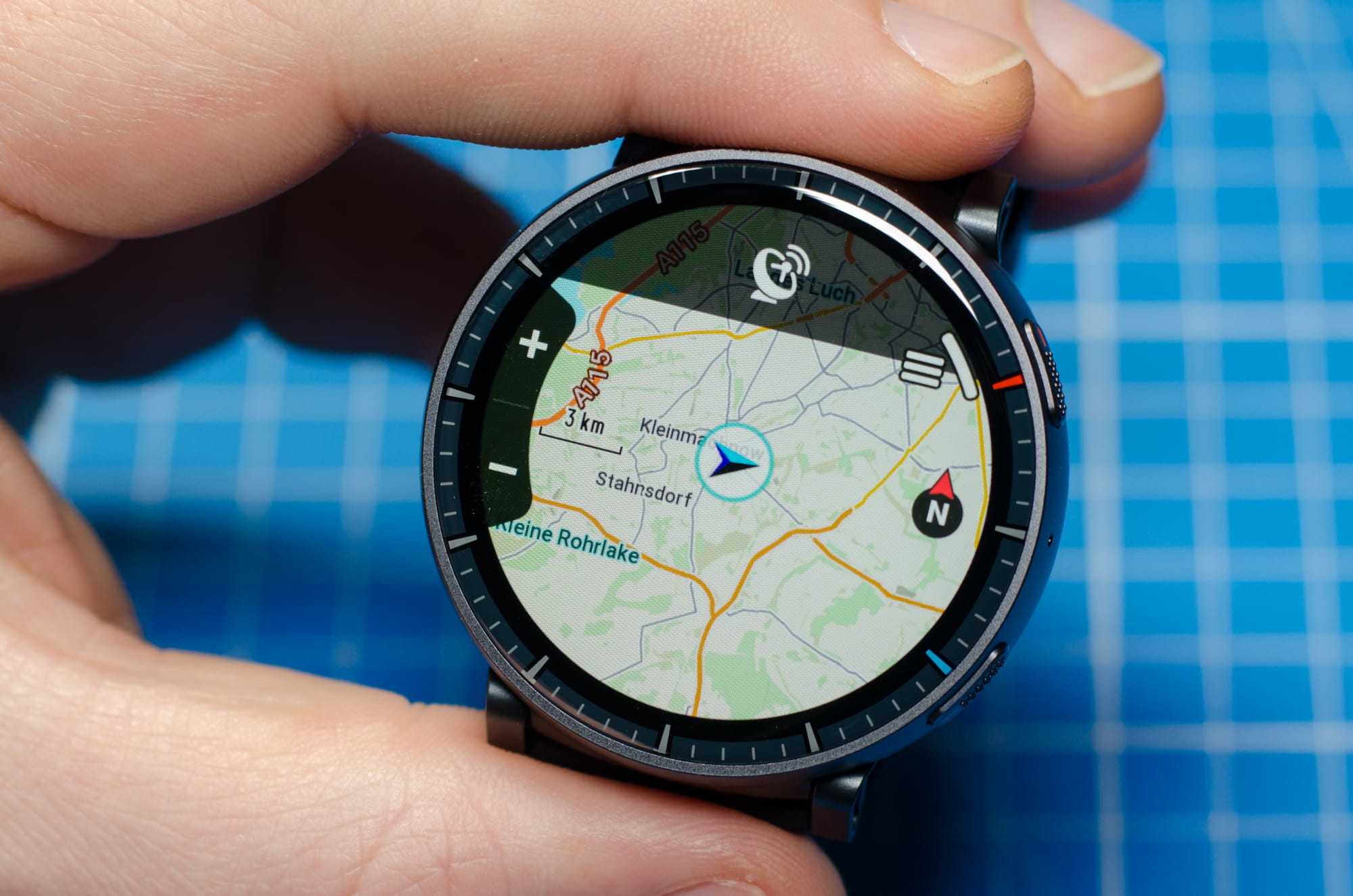
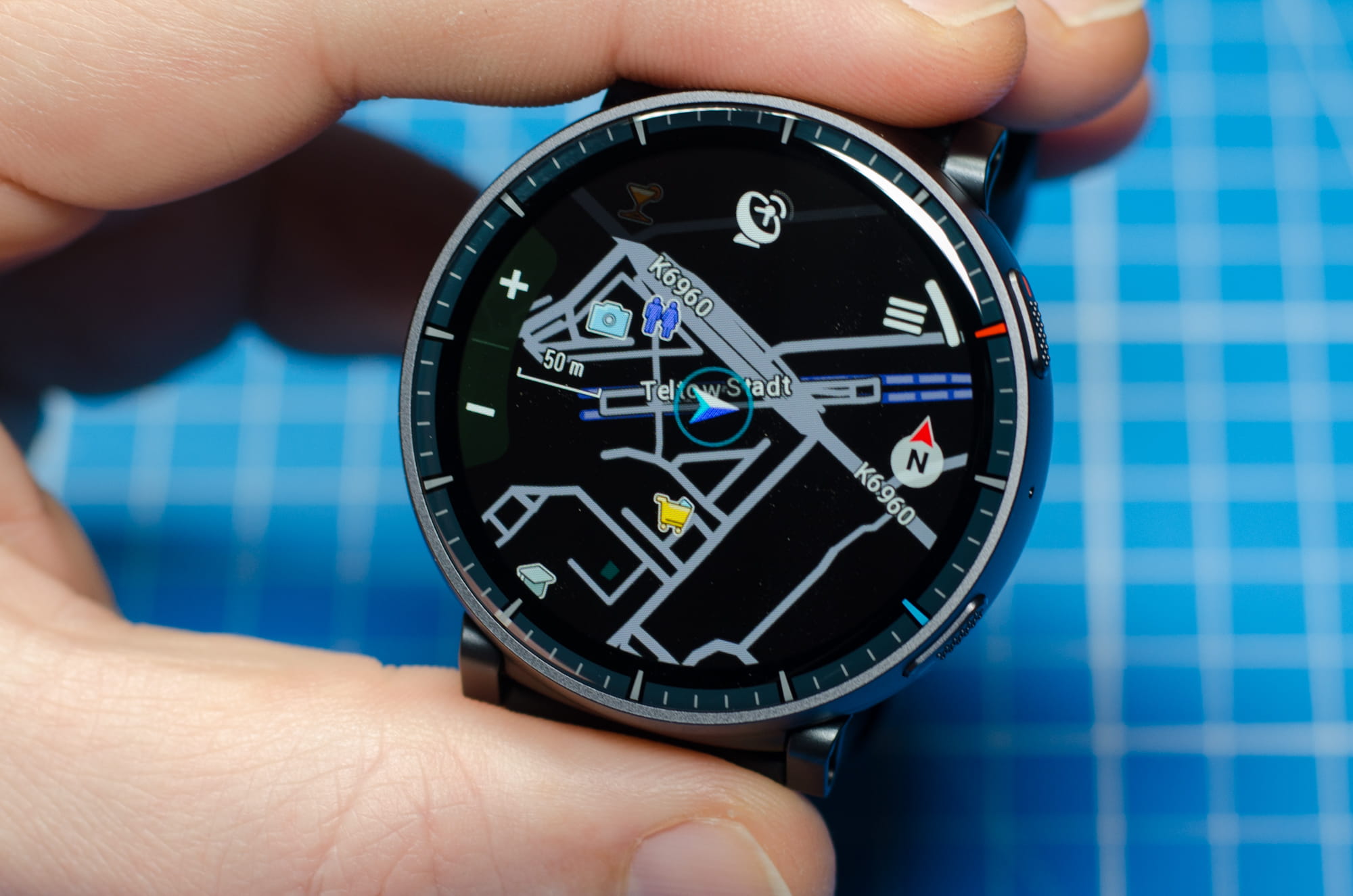
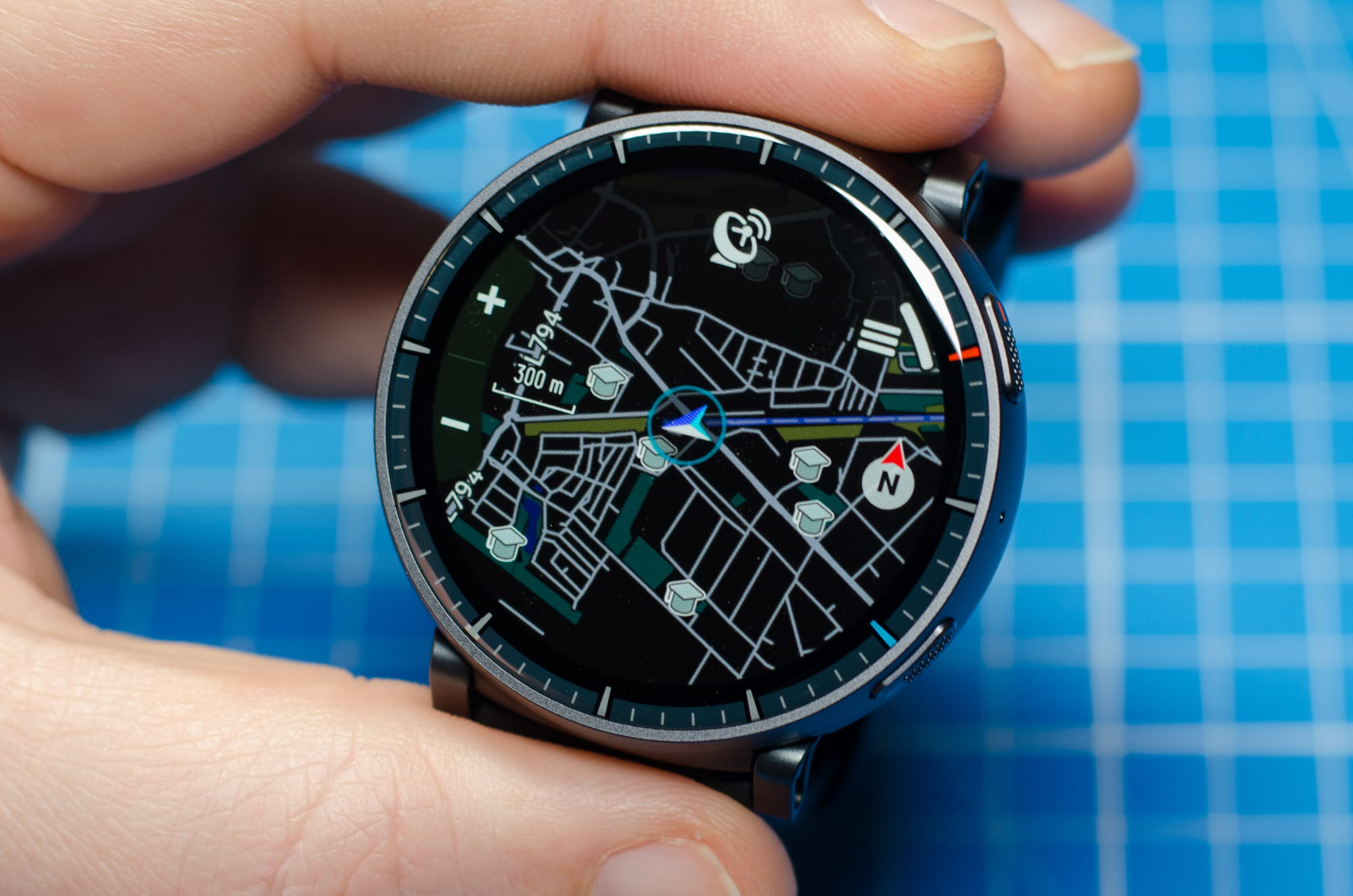
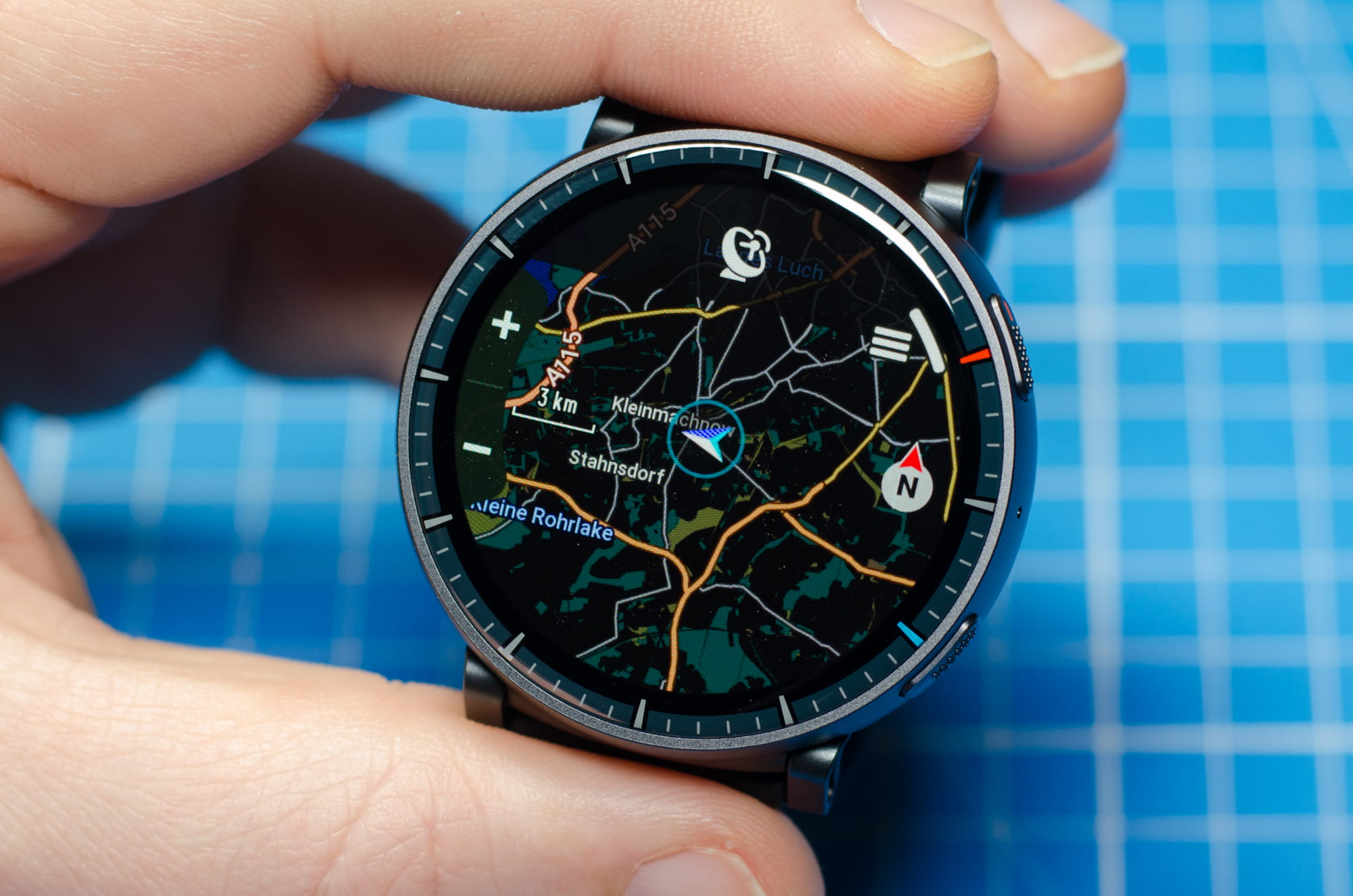
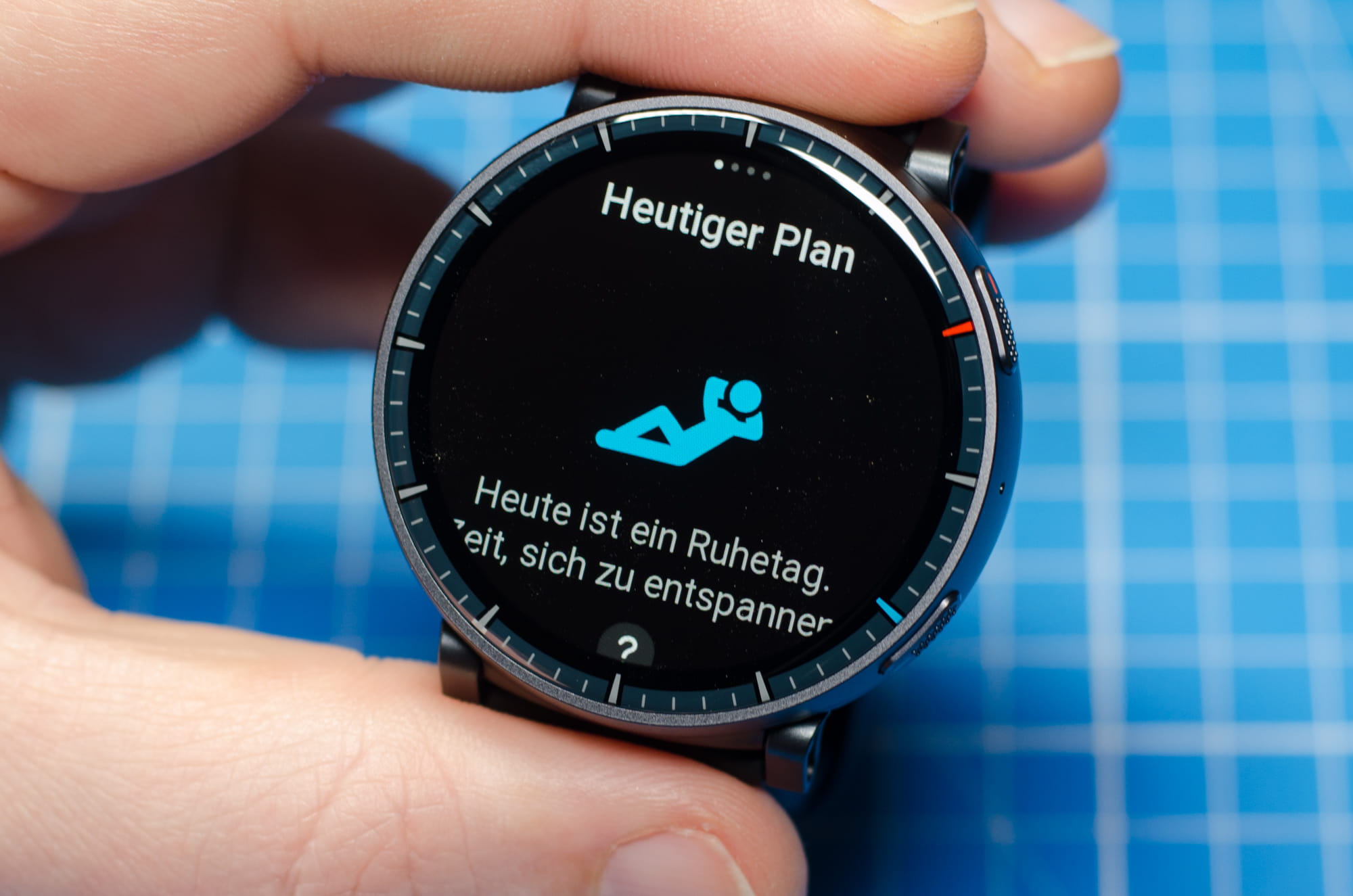
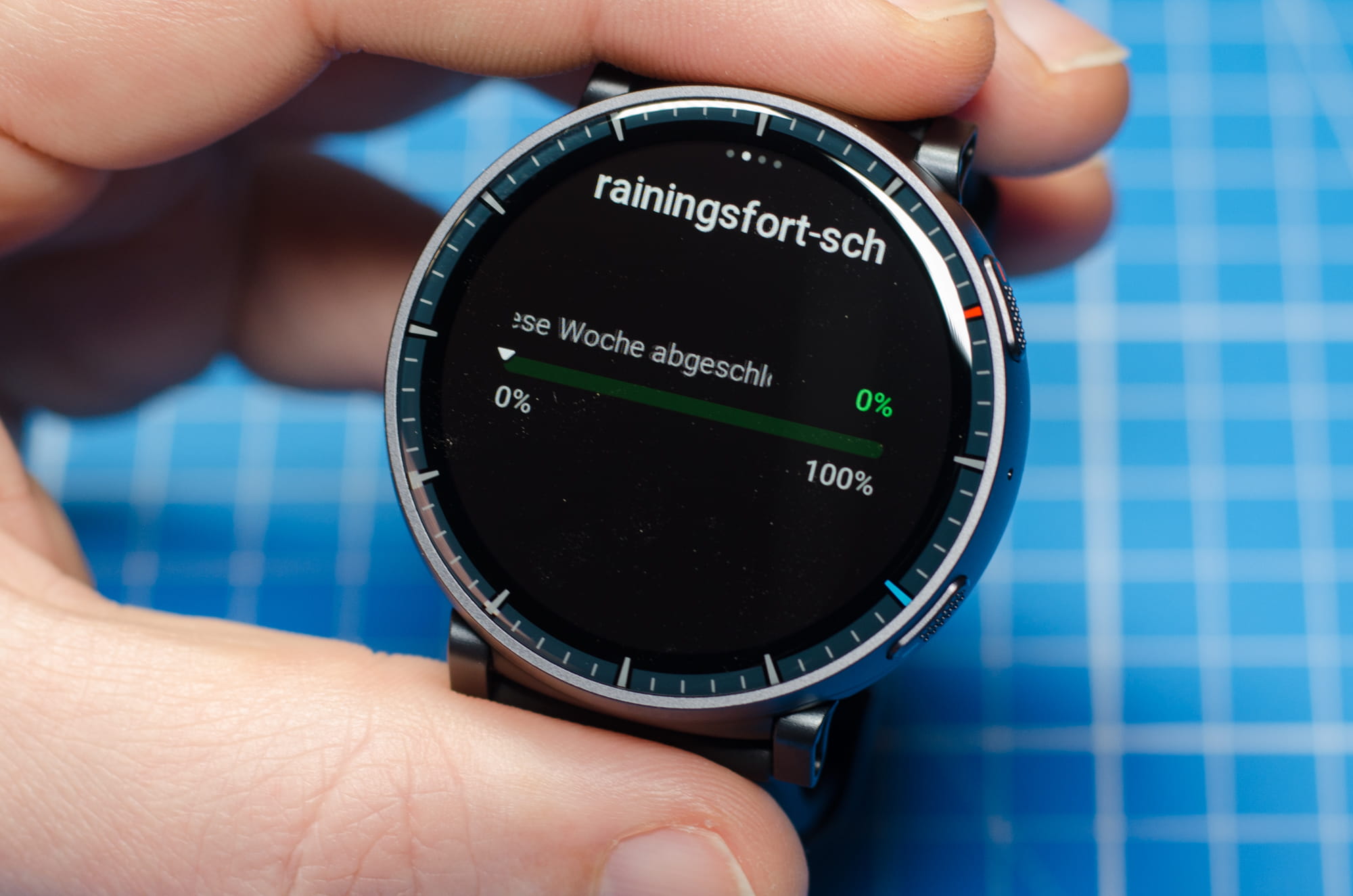
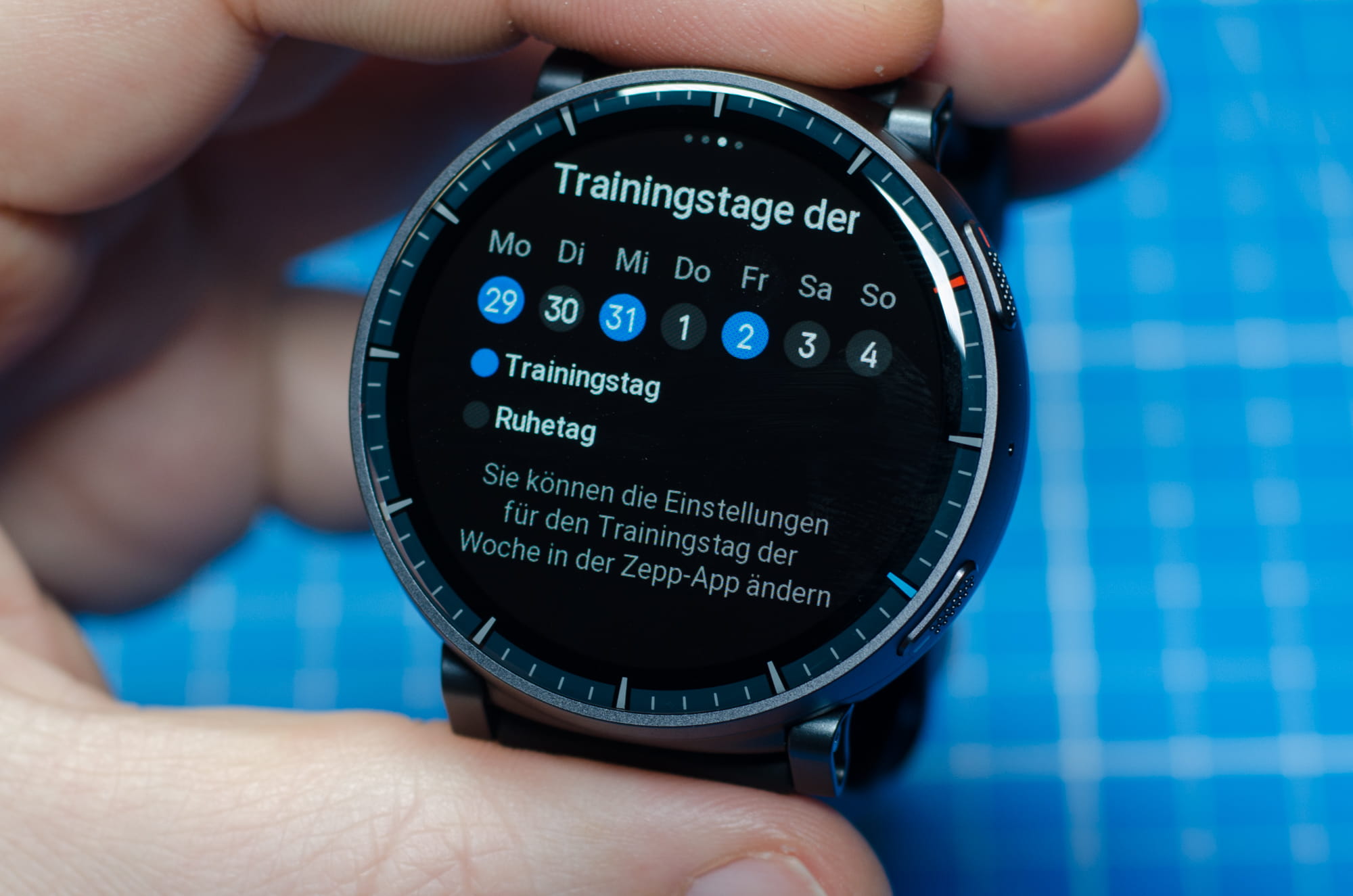
As you can see, the Active Max doesn’t introduce entirely new features of its own, but instead draws generously from the feature set of existing products.
Unboxing and first impressions
I’ve already had the chance to present numerous Amazfit models, and by now Amazfit seems to have settled on a standard packaging size. Not much larger than a few stacked chocolate bars, the Active Max comes in a snow-white box featuring the product name and an image of the watch on the front.
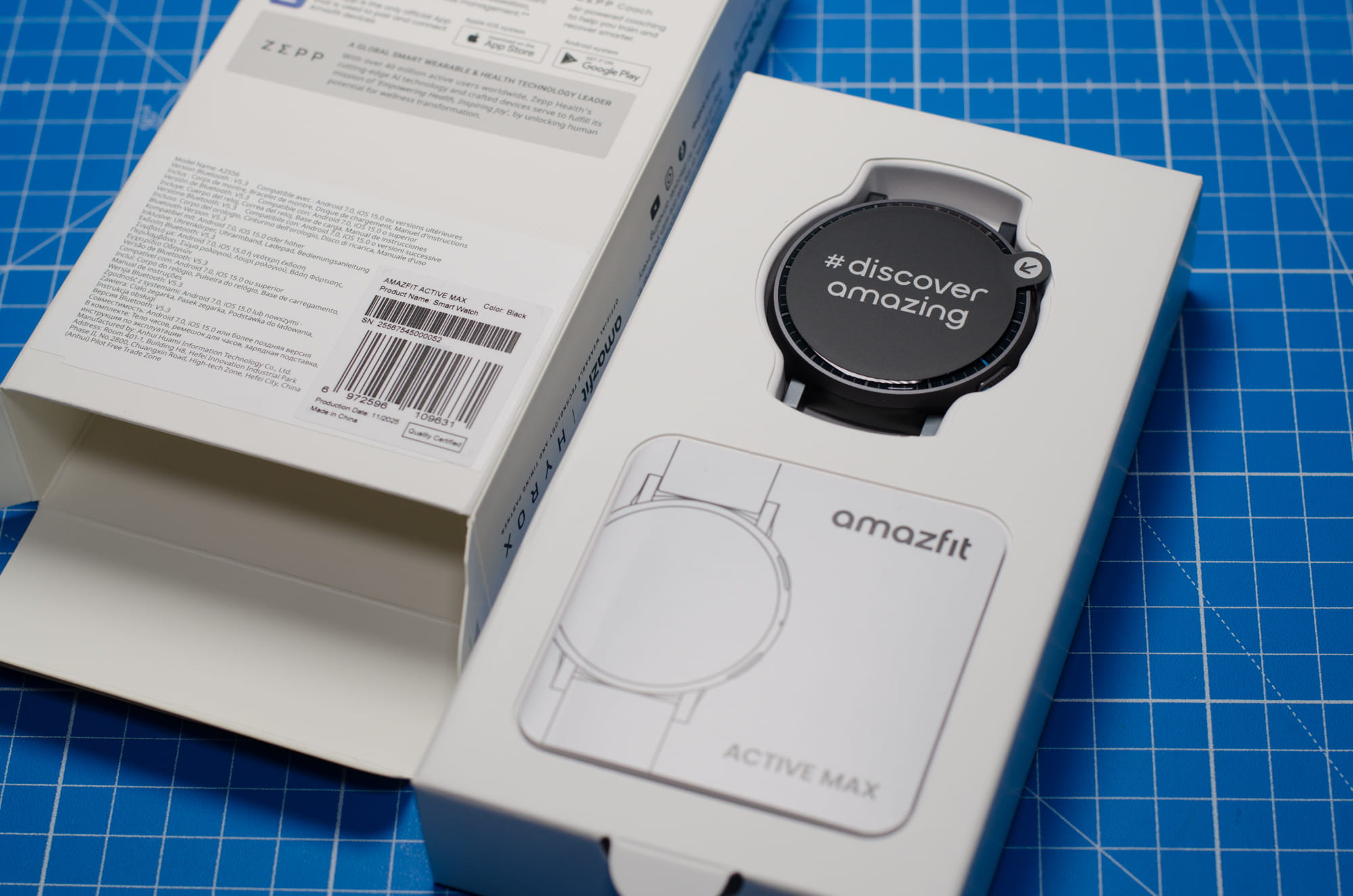
Box contents of the Amazfit Active Max
Inside the box, you’ll find — unsurprisingly:
- Active Max
- Strap
- USB charging cradle
- Warranty / safety information
The USB charging cradle no longer includes a cable, but instead offers a USB-C port. Accordingly, you’ll need to use an existing cable. While this may be an annoyance for some, most households now have plenty of USB-C cables available.
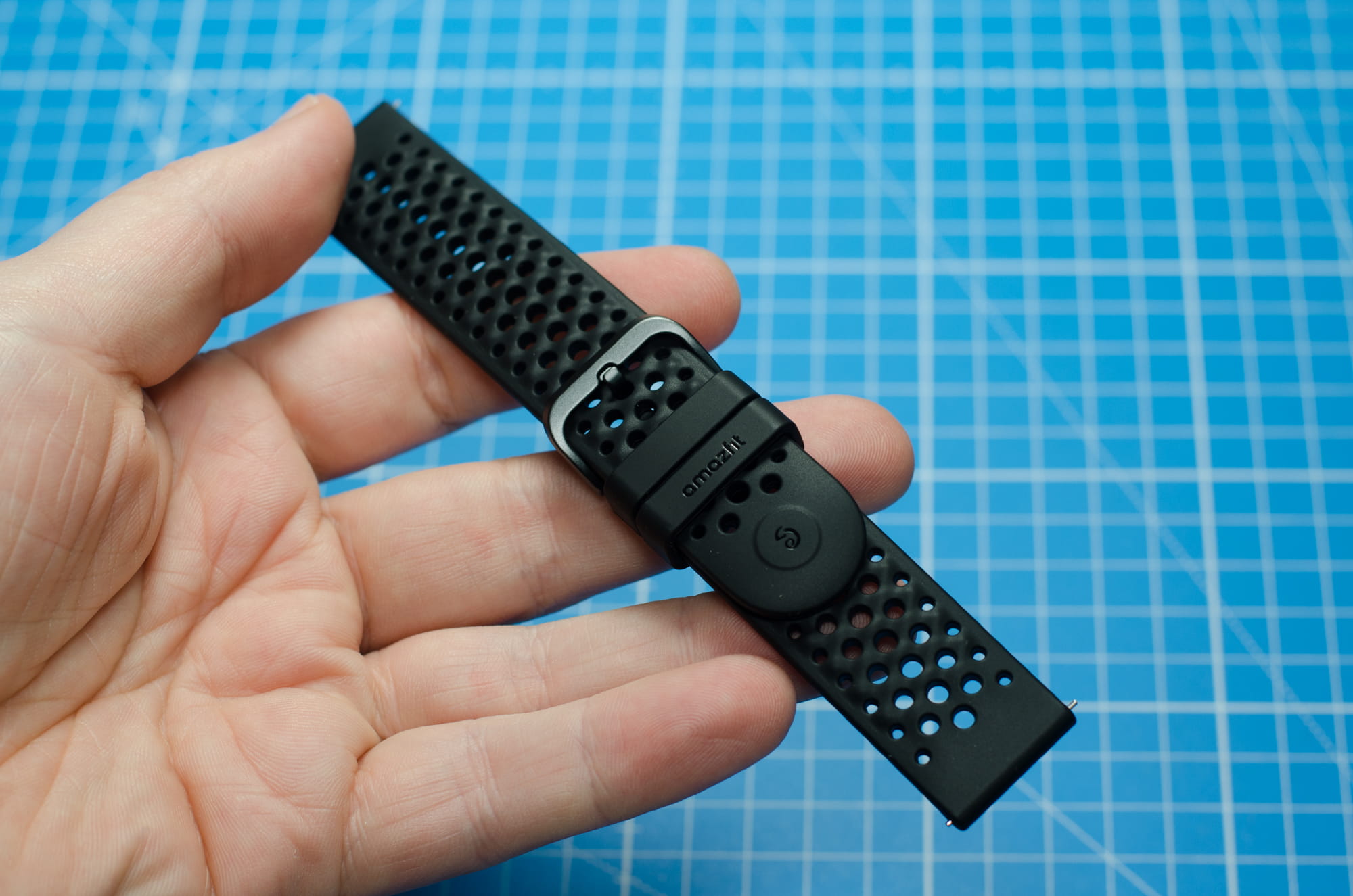
Perforated 22 mm strap
The heavily perforated strap still needs to be attached to the watch using spring bars. This can be done without tools and poses no problem. At the same time, the standard 22 mm lug width allows the use of third-party straps.
The name “Max” certainly also refers to the dimensions of the watch. No, they’re not excessive, but at 48.5 × 48.5 × 12.2 mm, the watch is noticeably more present than the Active 2, which measures 43.9 × 43.9 × 9.9 mm. To be fair, the battery has grown from 270 mAh to 658 mAh and needs to be housed somewhere.
As with the Active 2, only the upper half of the case is made of metal. While the Active 2 uses stainless steel, the Active Max features a matte aluminum alloy.
On the back, the PPG sensor is installed, which appears to be identical to that of other current models (Balance 2, T-Rex 3 Pro).
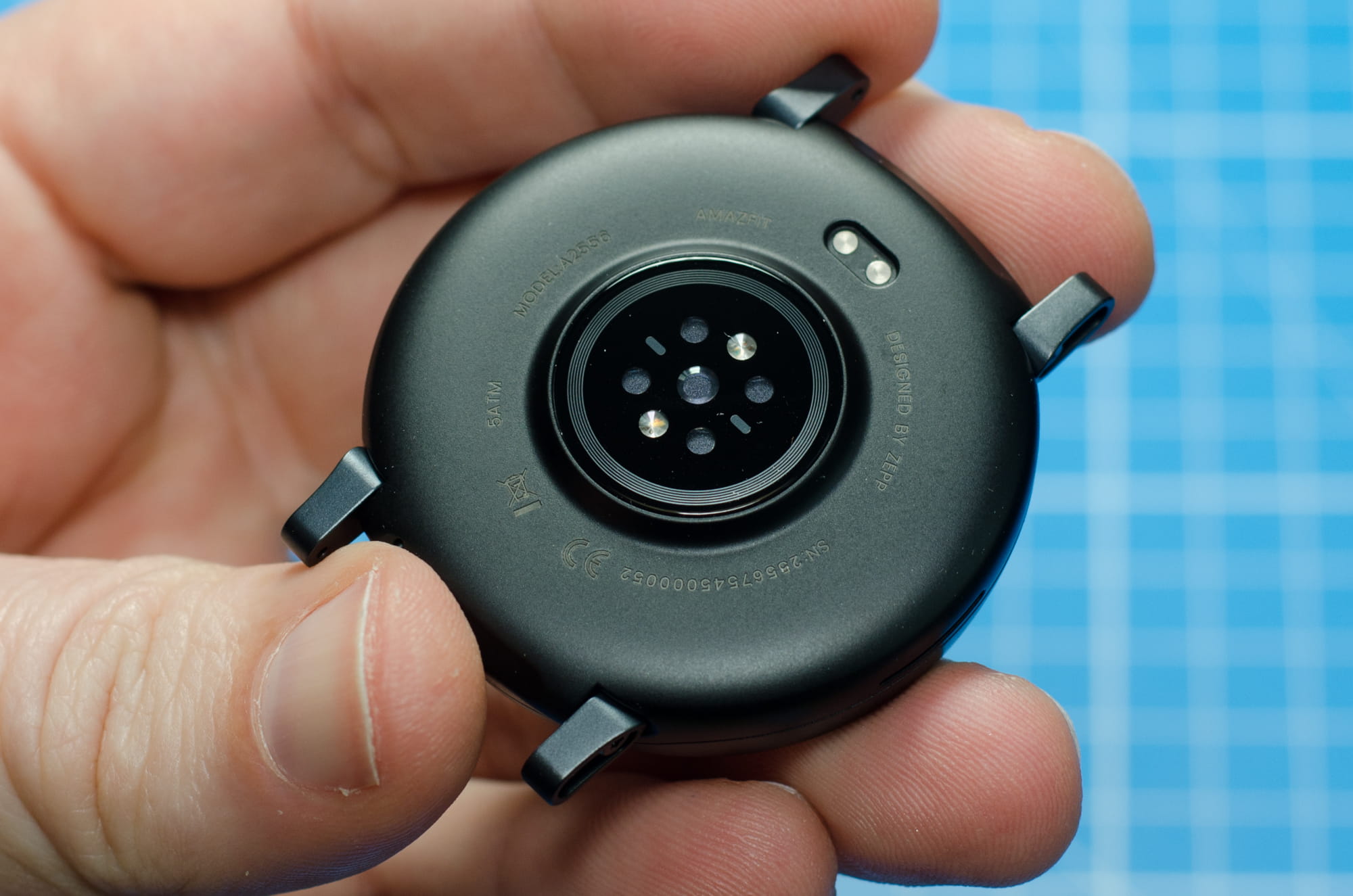
PPG sensor on the back of the Active Max
The Active Max is operated via two side buttons and the touch display. As with the Active 2, the buttons protrude only slightly from the case.
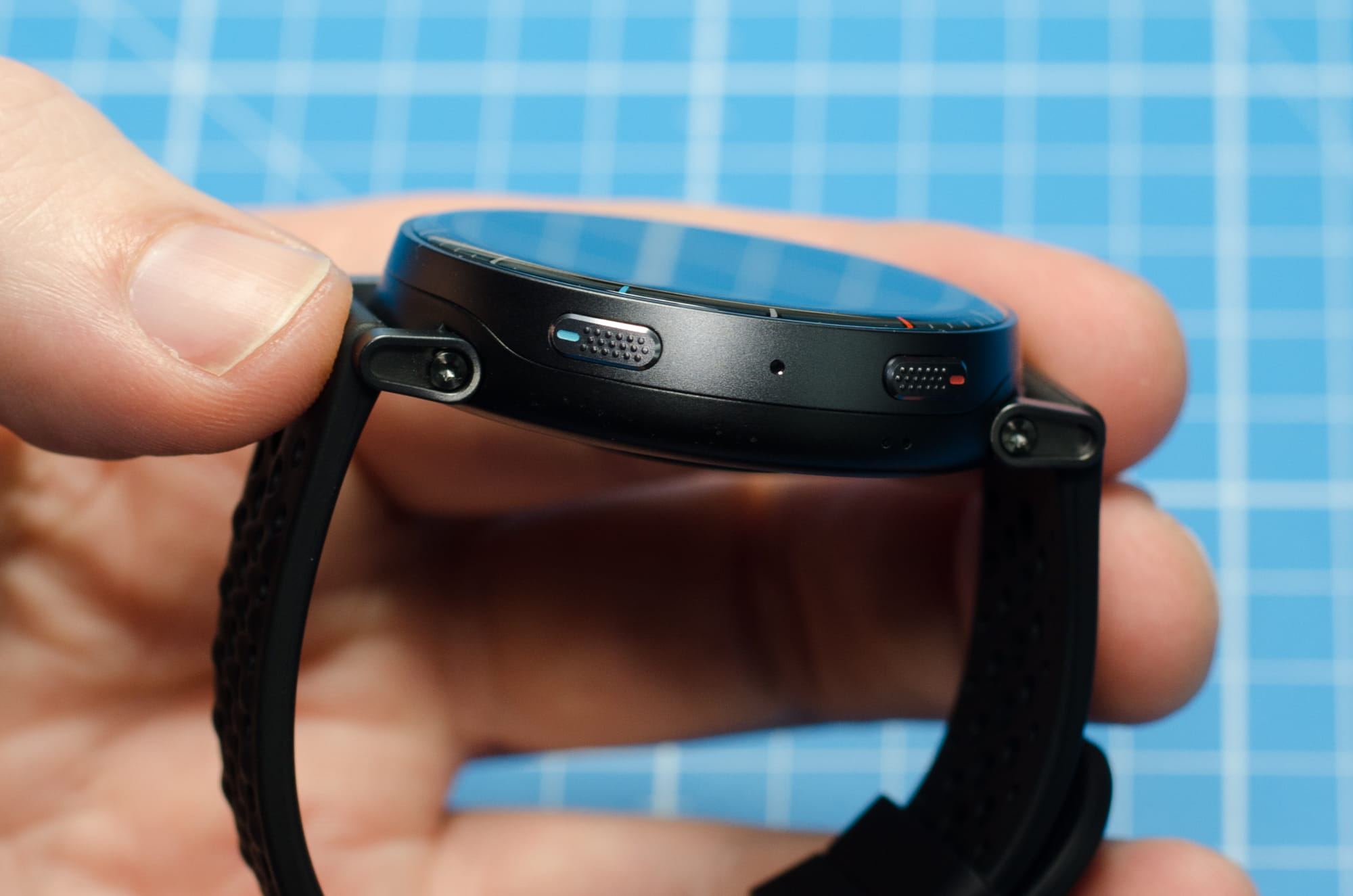
Side-mounted buttons
Despite this, the pressure point is good and clearly perceptible, although operating the watch with gloves on remains a challenge.
First steps with the Active Max
Anyone who already owns an Amazfit watch will quickly find their way around the Active Max. When the display is activated, the watch face is shown, displaying the time along with a few key metrics. There are hundreds of additional watch faces available – some are free and some you have to pay for.
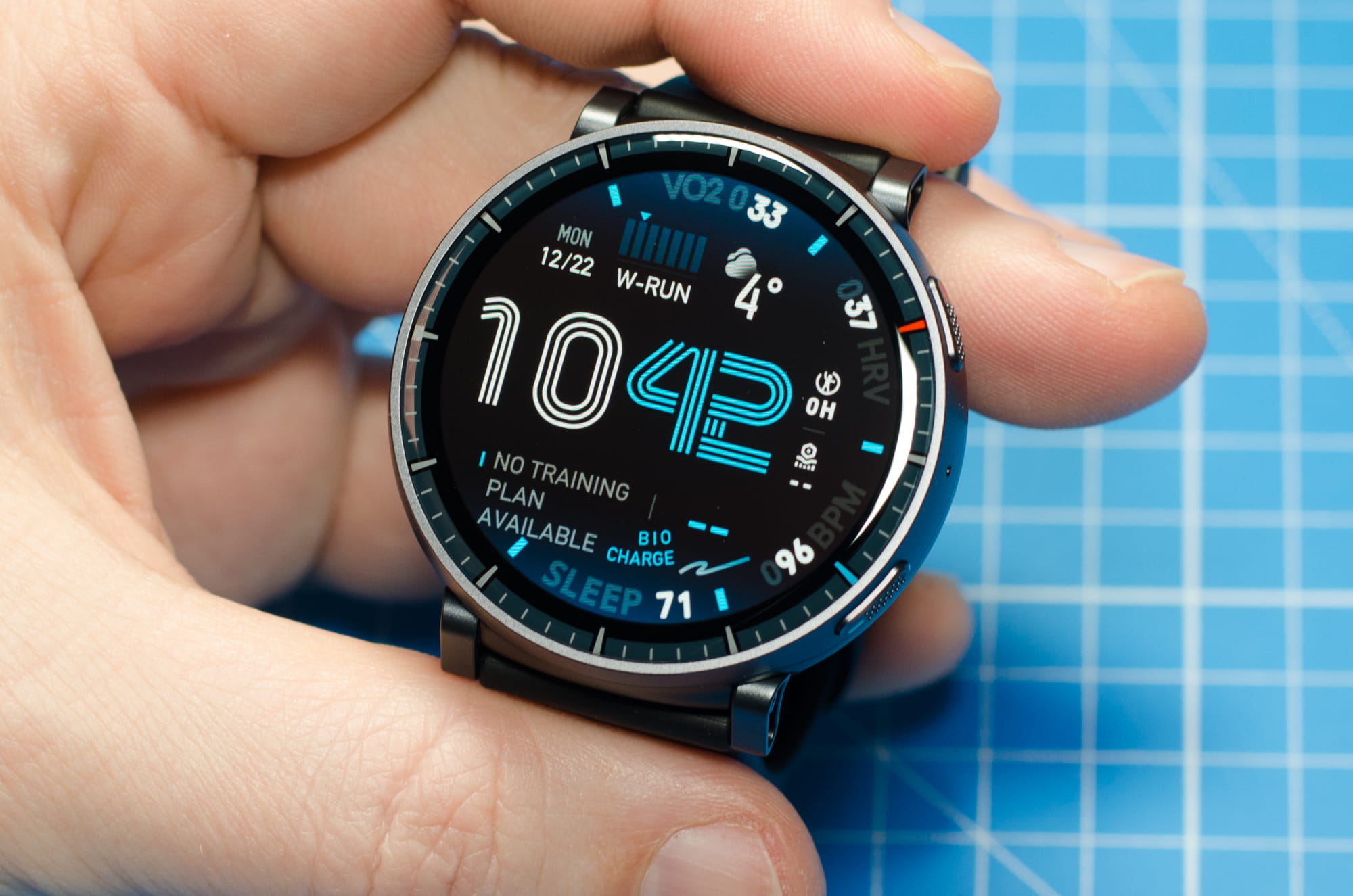
Default watch face
Swiping left or right opens detailed views (e.g. weather, activities, PAI). Swiping up opens the list of notifications, while swiping down reveals the toolbar with quick settings.
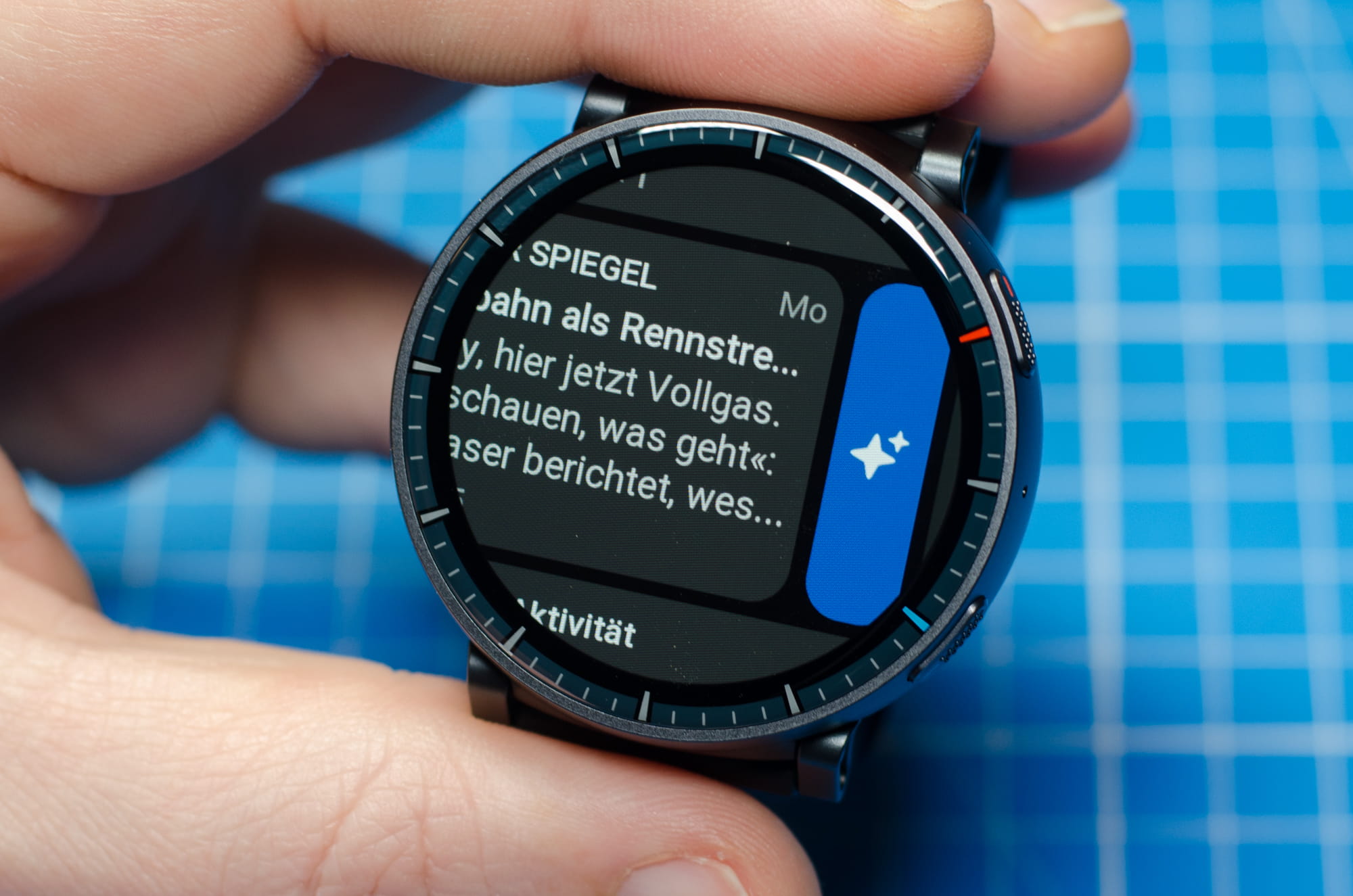
Notifications with action menu
Notifications mirror those received on the paired smartphone. Which app notifications are allowed on the watch can be configured in the Zepp app.
Back to the buttons: pressing the top button opens the app menu, which can be displayed either as a list or in a honeycomb layout. Pressing the bottom button opens the sports app.
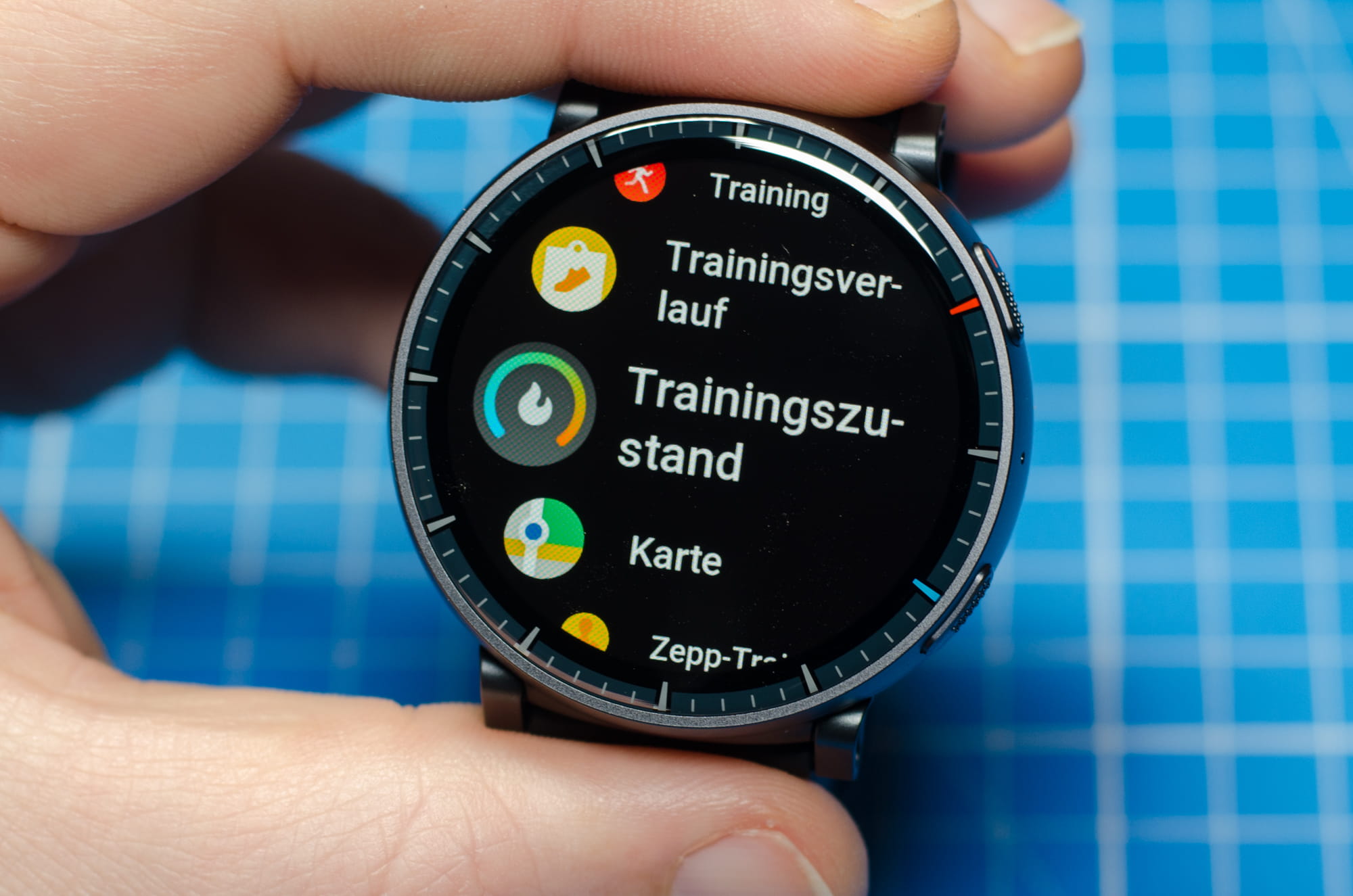
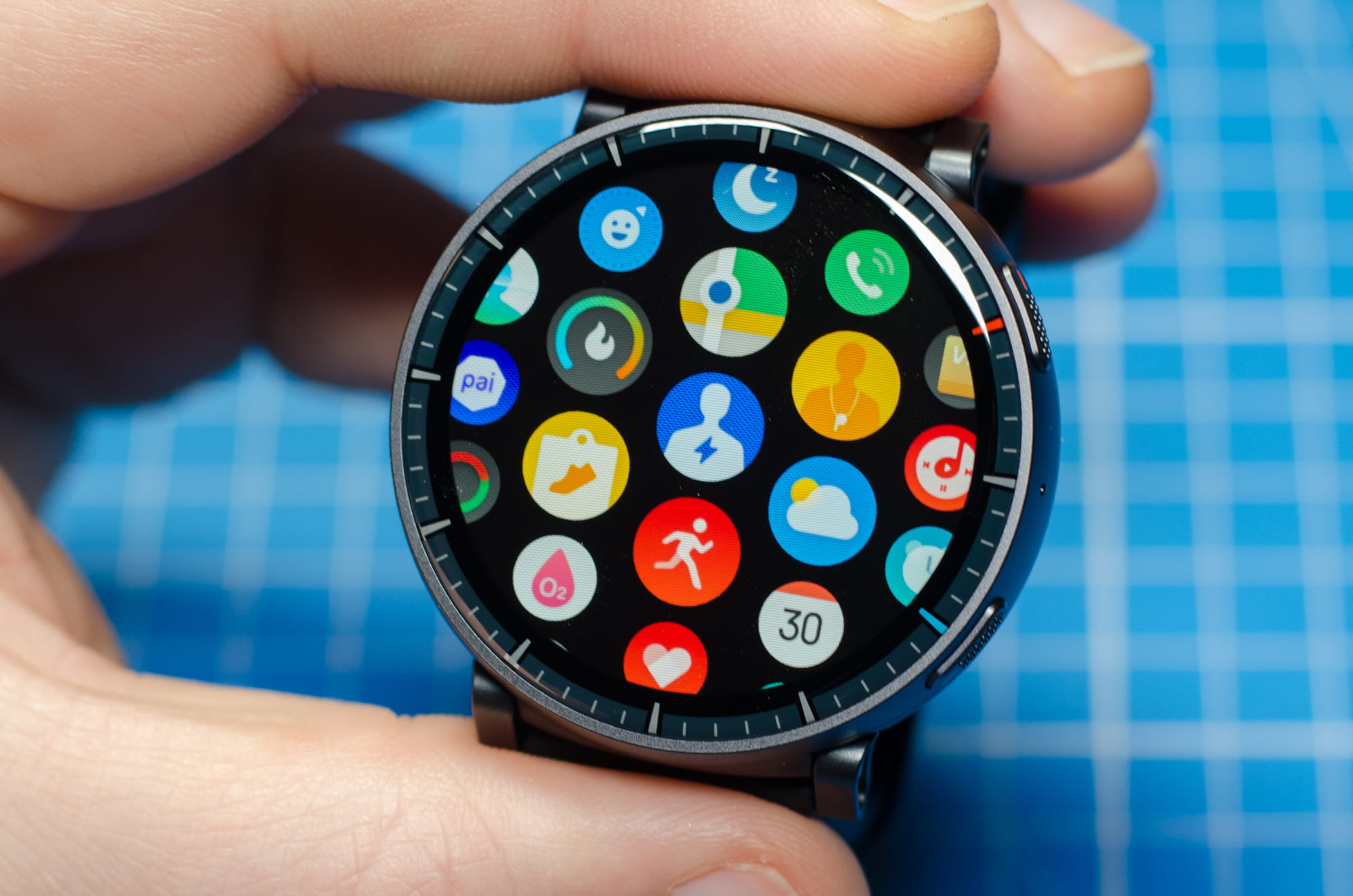
Overall, the proprietary Zepp OS responds very smoothly to user input, making interaction with the watch genuinely enjoyable.
The adjustable text size is particularly well done, even if it’s not yet reflected in all views. Users with good eyesight can reduce the text size slightly to avoid awkward line breaks or scrolling text. Those who struggle with small text can simply increase the font size.
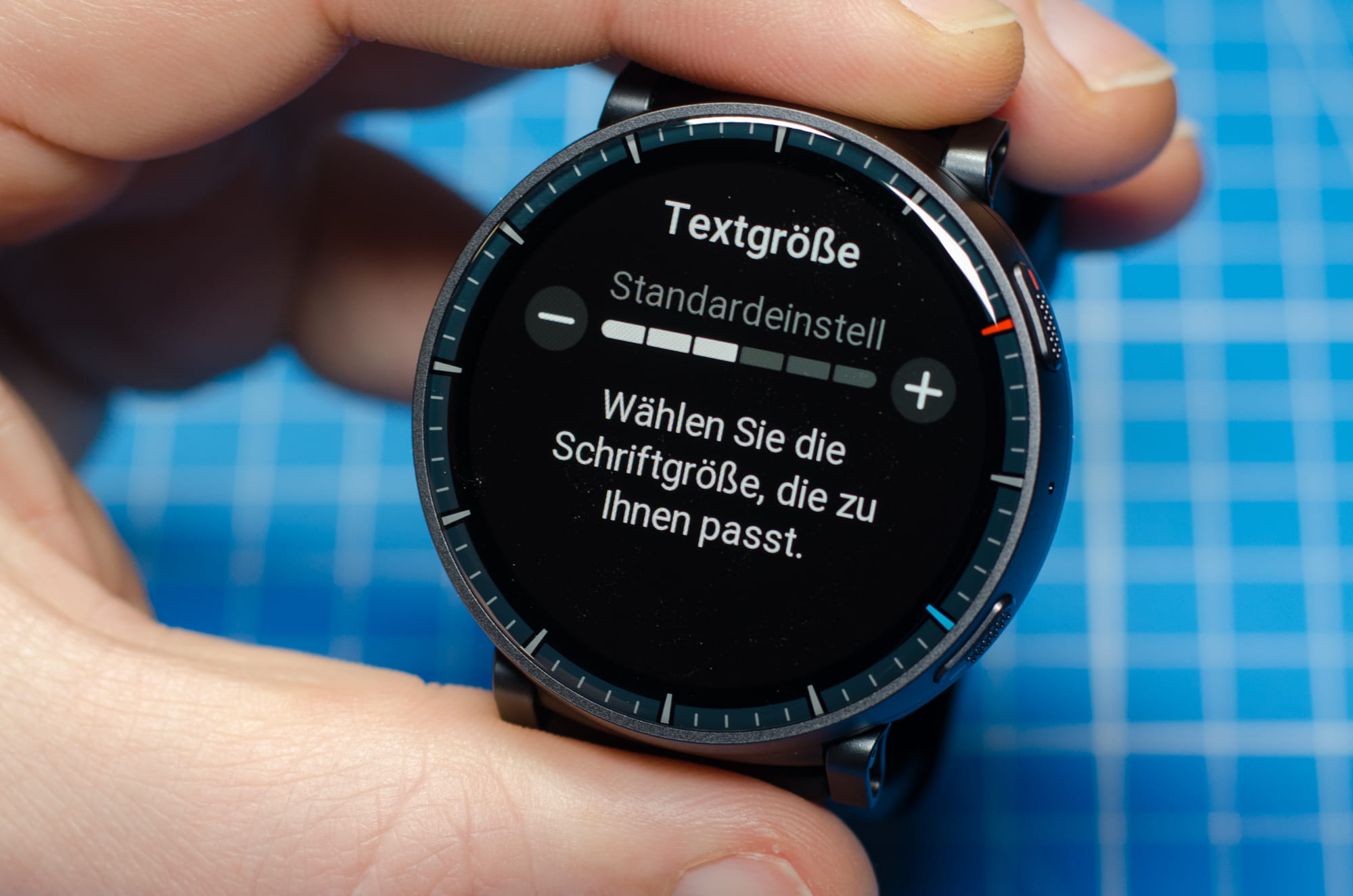
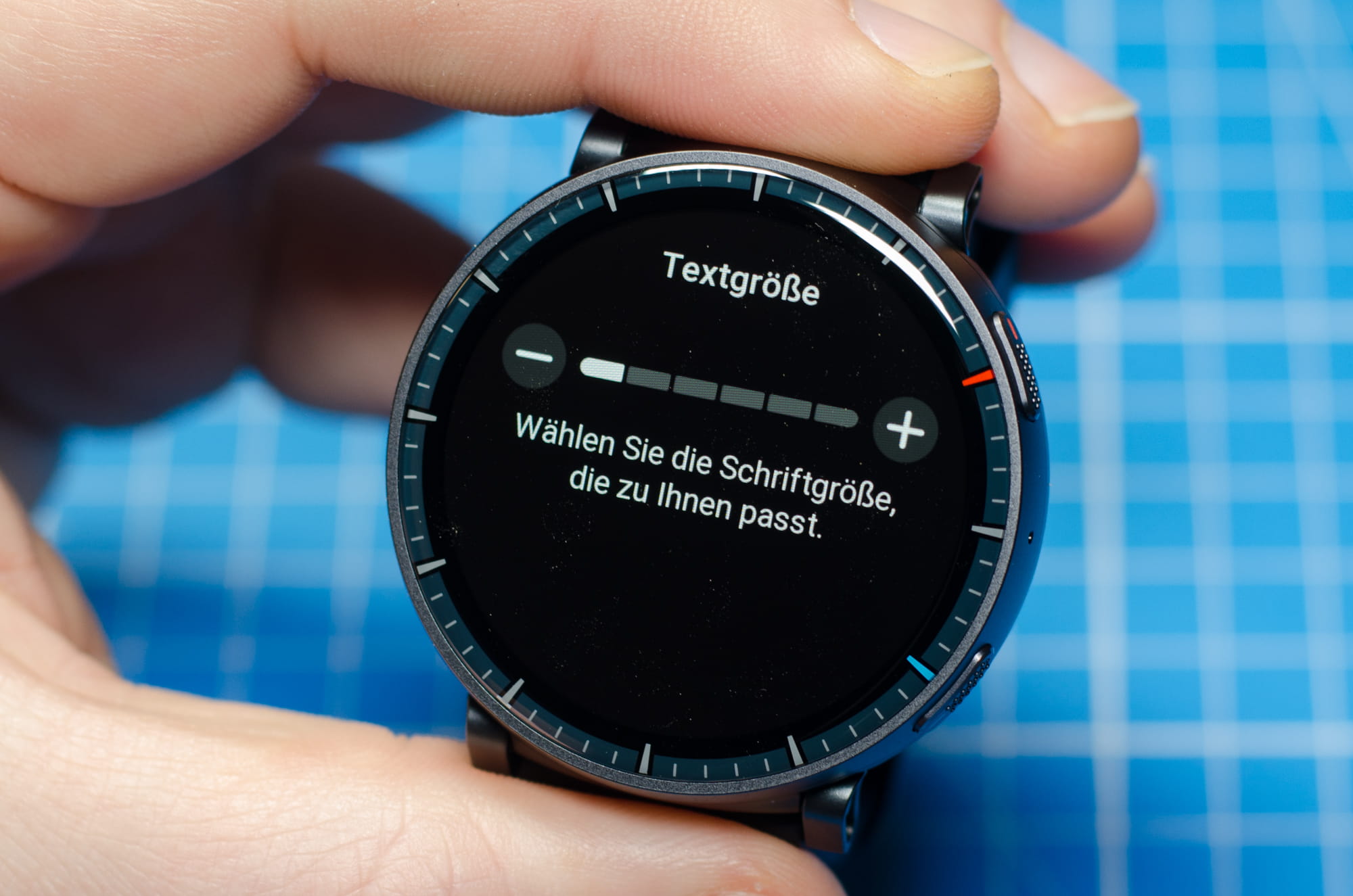
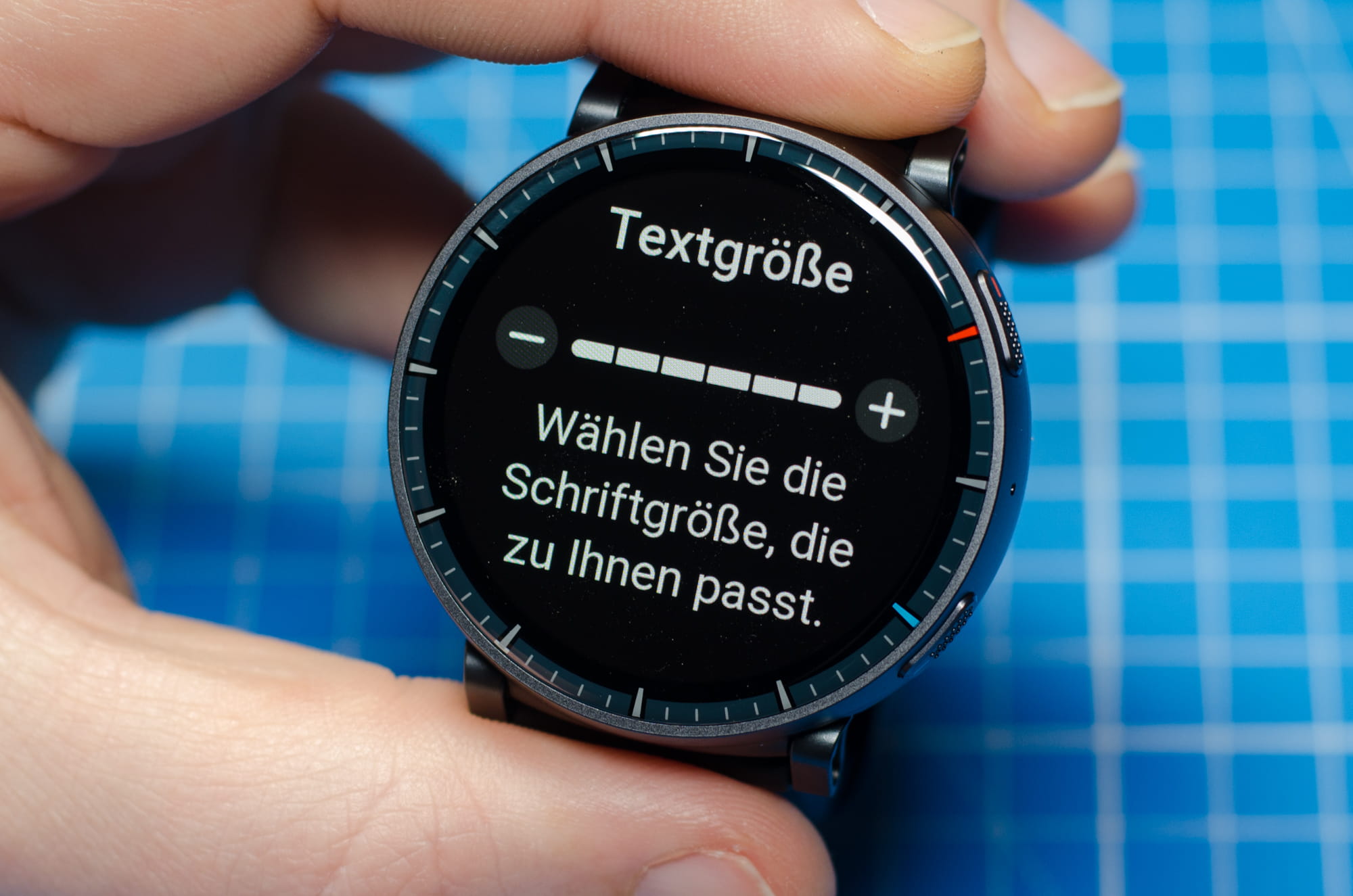
To save power, the display usually turns on only when you raise your wrist—and turns off again when you lower it.
Everyday features
The Amazfit Active Max comes equipped with a wide range of everyday features, including apps for:
- Calendar
- Weather
- Compass
- Barometer
- Phone finder
- Membership cards
- Voice memos
- NFC for contactless payments (Zepp Pay via Curve)
These are the same apps with the same functionality found on other current Amazfit watches.
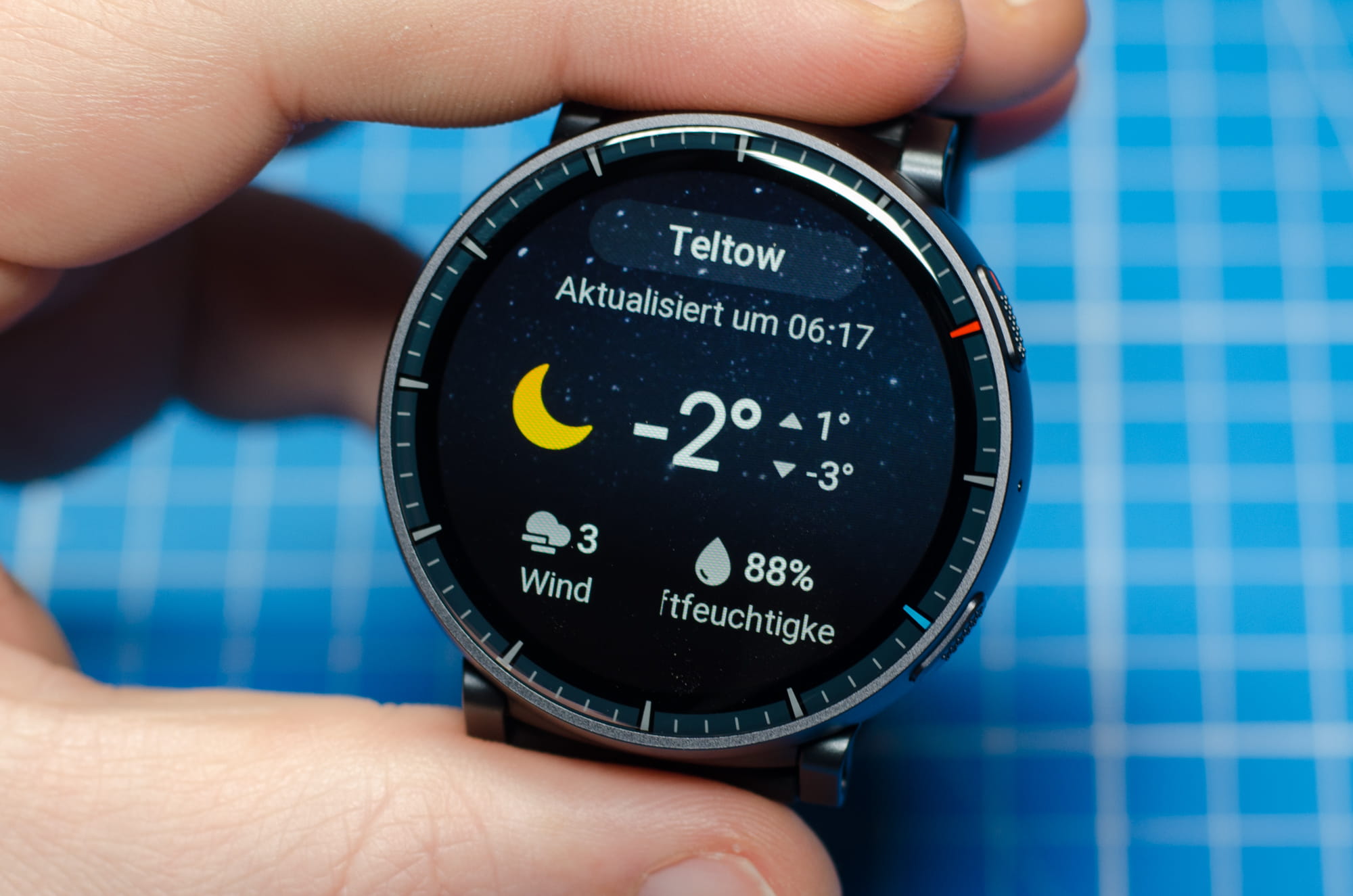
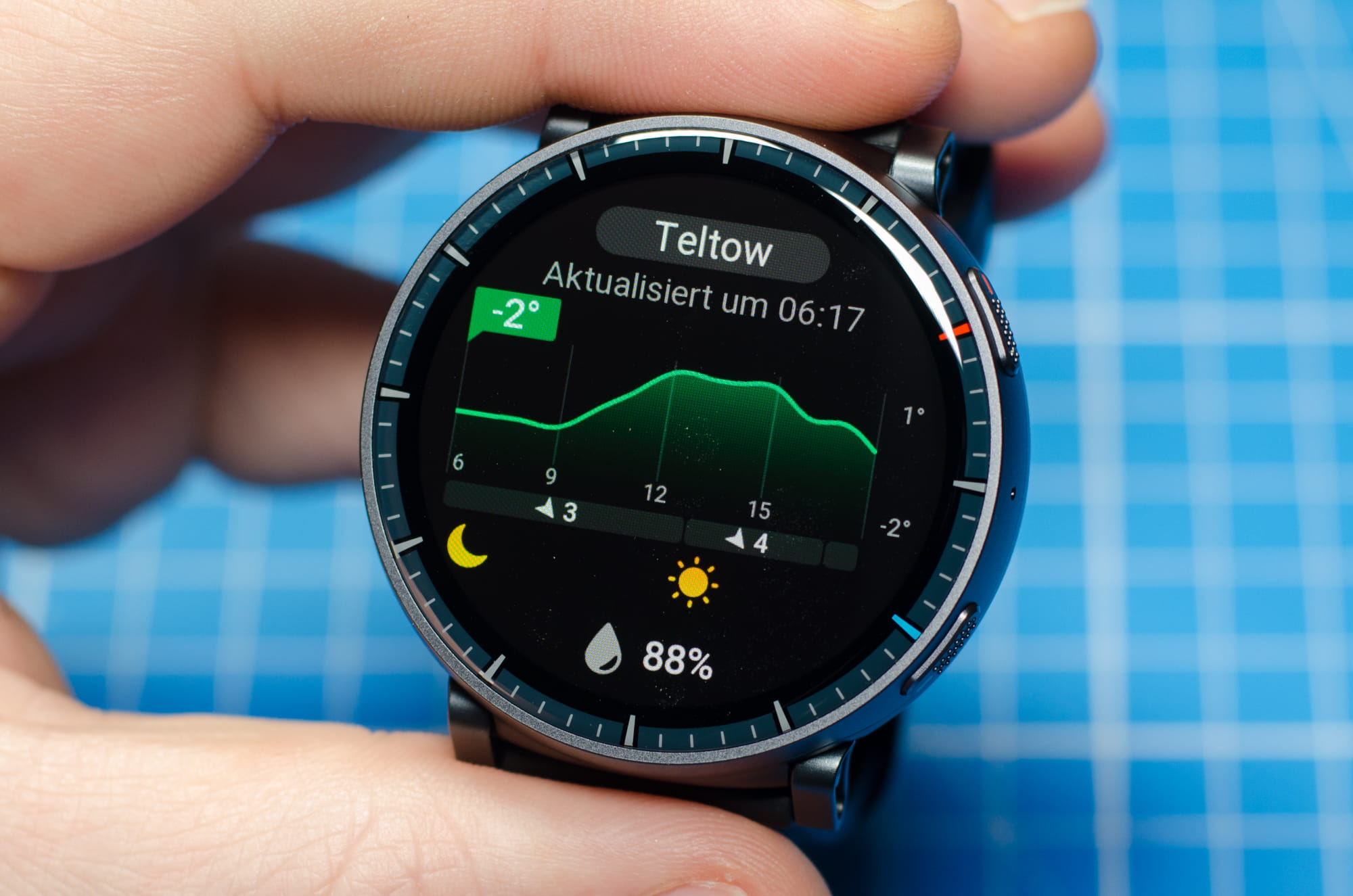
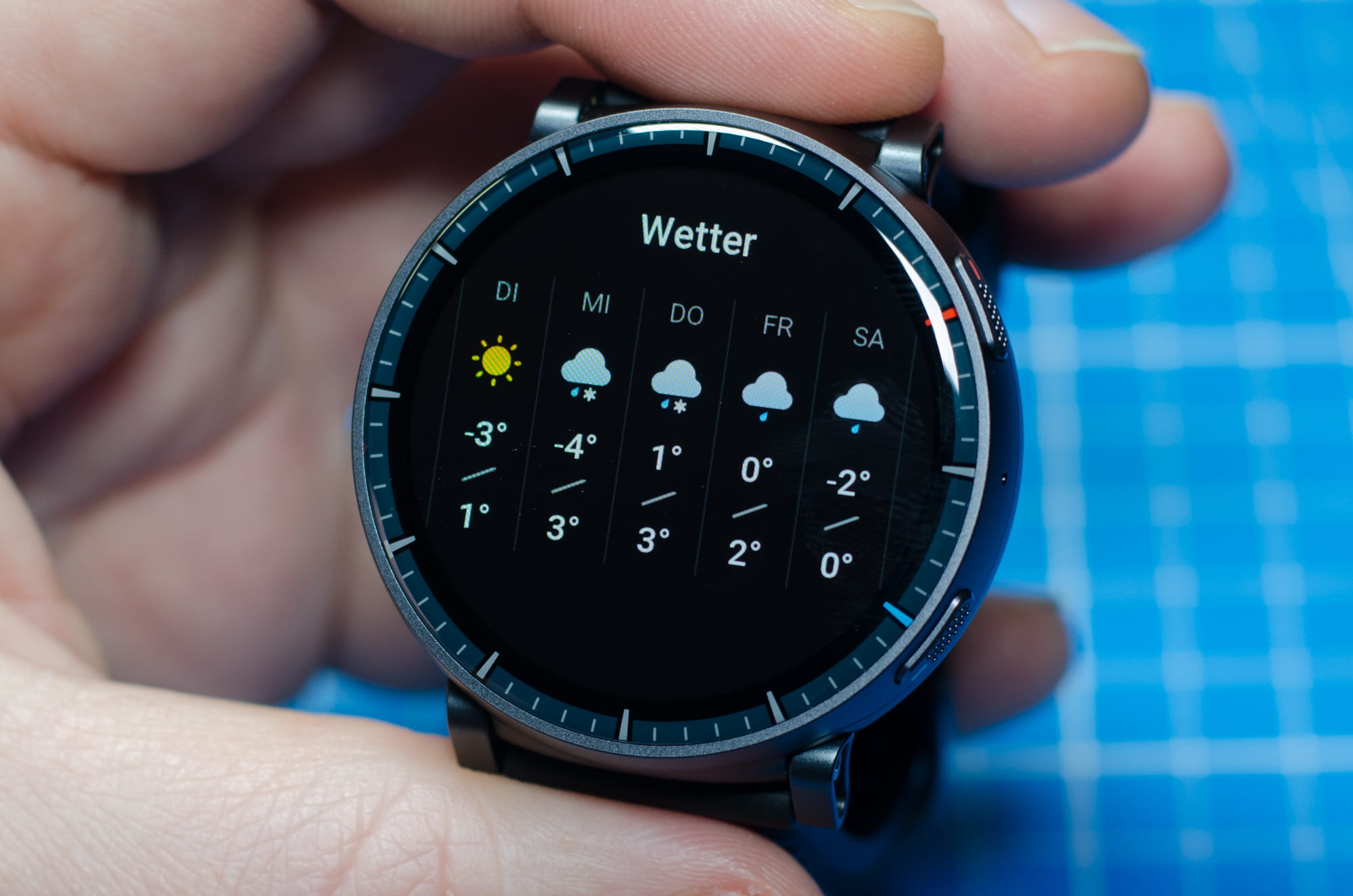
Given the short test period, I’ll refrain from a detailed description here. You’ll find more information in my reviews of the Balance 2 and T-Rex 3. Functionally, the apps are identical.
Health features
Beyond sports, the Active Max monitors a wide range of vital signs and metrics, including:
- Activity (steps, floors, calories burned)
- Heart rate
- Heart rate variability
- Stress
- Sleep
- Cycle tracking
- Blood oxygen saturation (SpO2)
New to the Active series is the BioCharge feature, which indicates how much energy reserve you have left for the rest of the day.
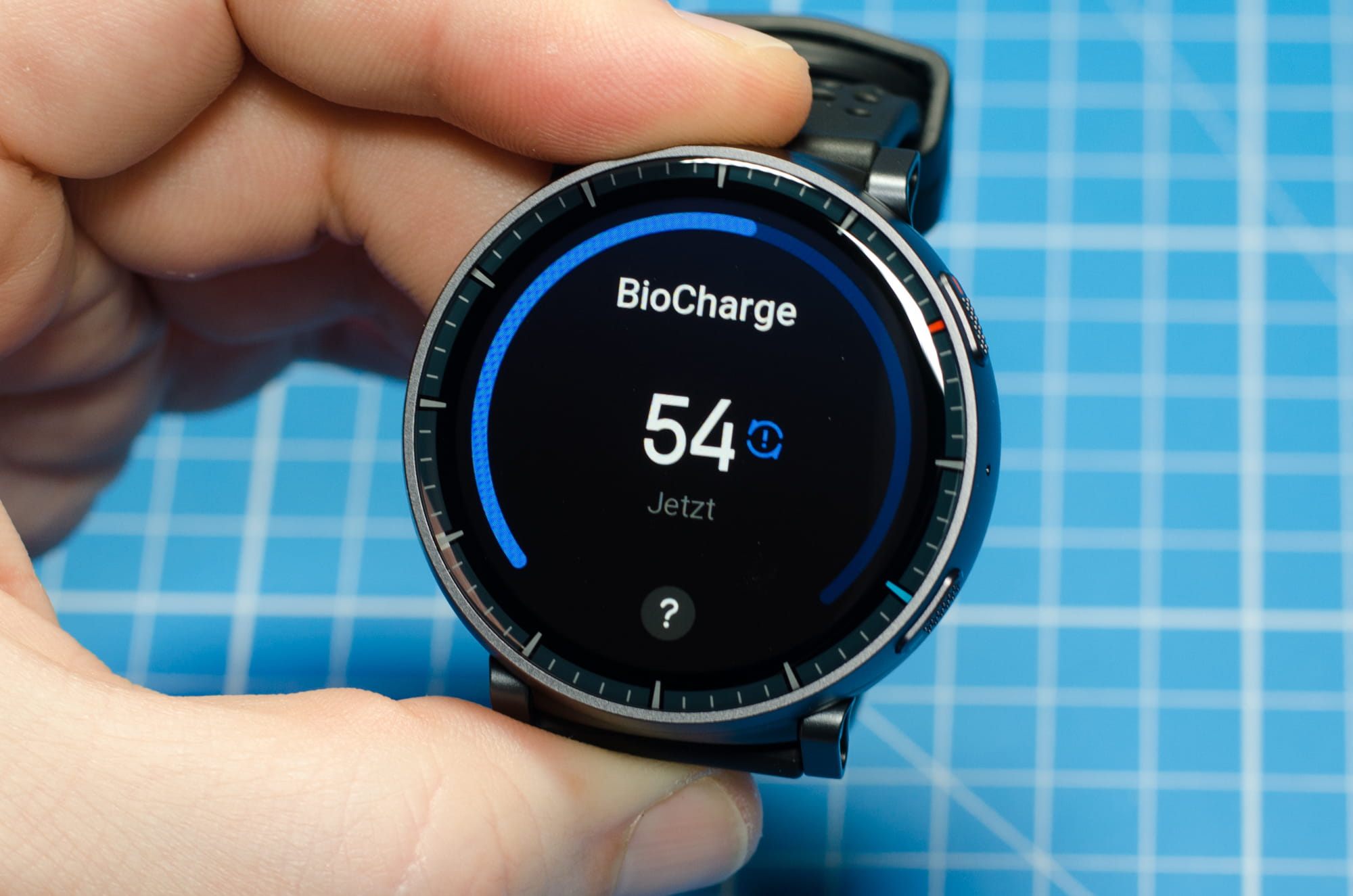
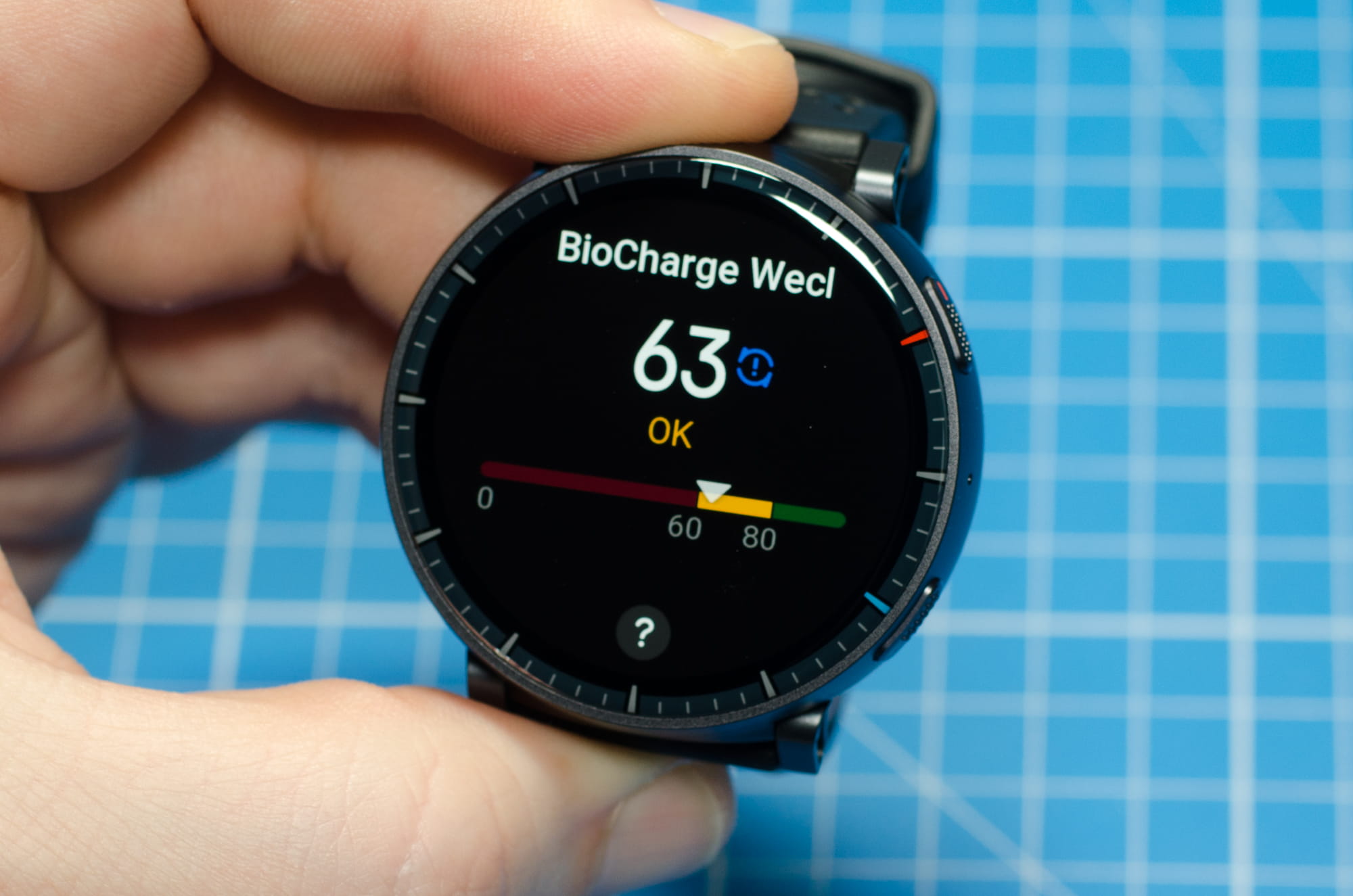
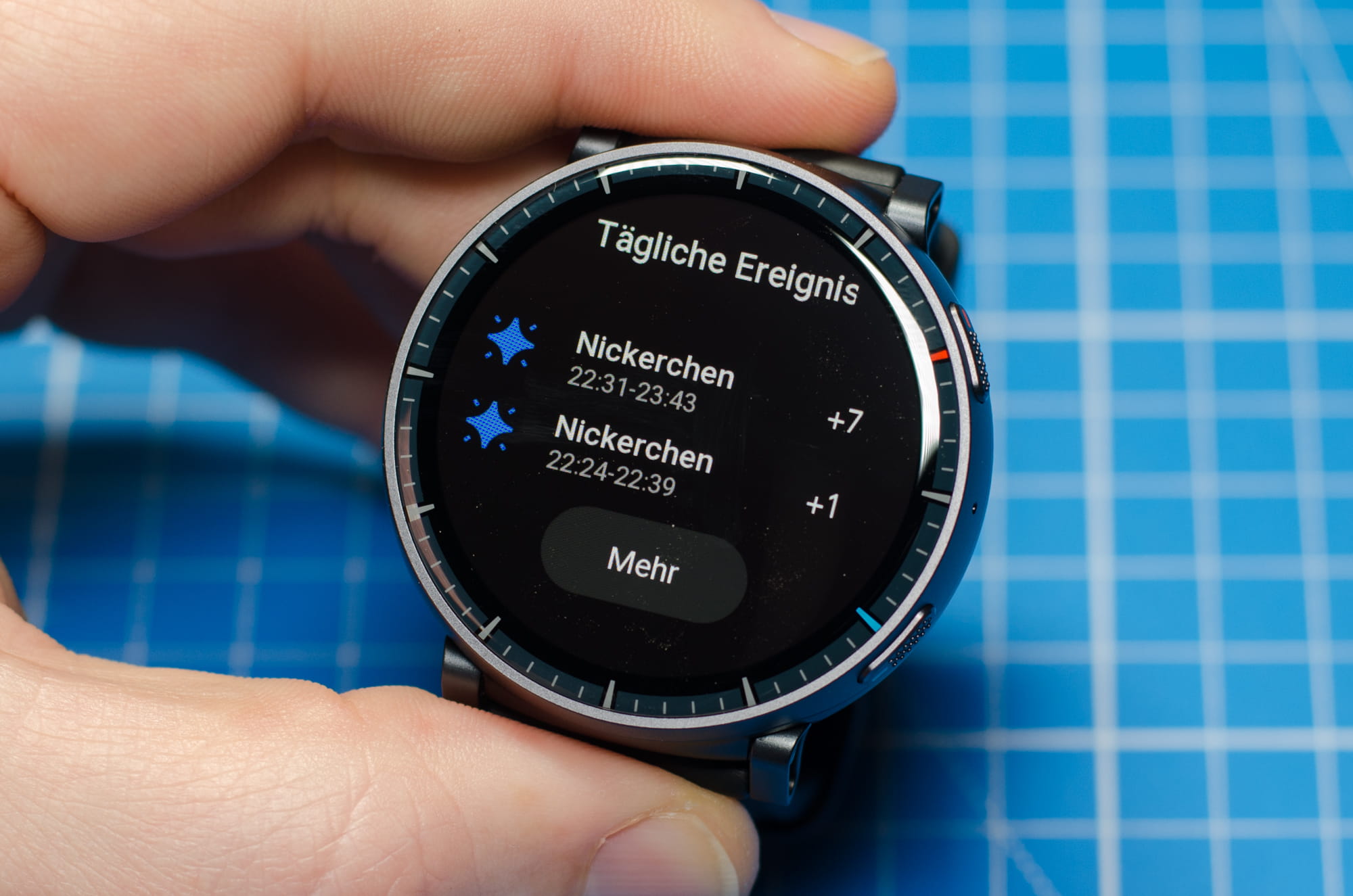
BioCharge replaces the Readiness Score. It’s clear that BioCharge is still a bit of a work in progress, even though the feature is already usable. With the latest firmware update, additional details have been added, allowing users to view not only the current value but also the value upon waking and the events (e.g. naps or activities) that cause BioCharge to rise or fall.
The multi-day history and the decline throughout the day can’t yet be viewed on the watch itself. I expect Amazfit to add this later, similar to what they did with the Balance 2 and T-Rex 3 Pro.
Sports features
Amazfit watches have always been more than just smartwatches — they also offer a wide range of sports features and metrics, regardless of how meaningful all 160+ sports profiles actually are.
Before recording any activity, you first select the sport. To avoid scrolling through a list of 160+ entries, the selection can be customized.
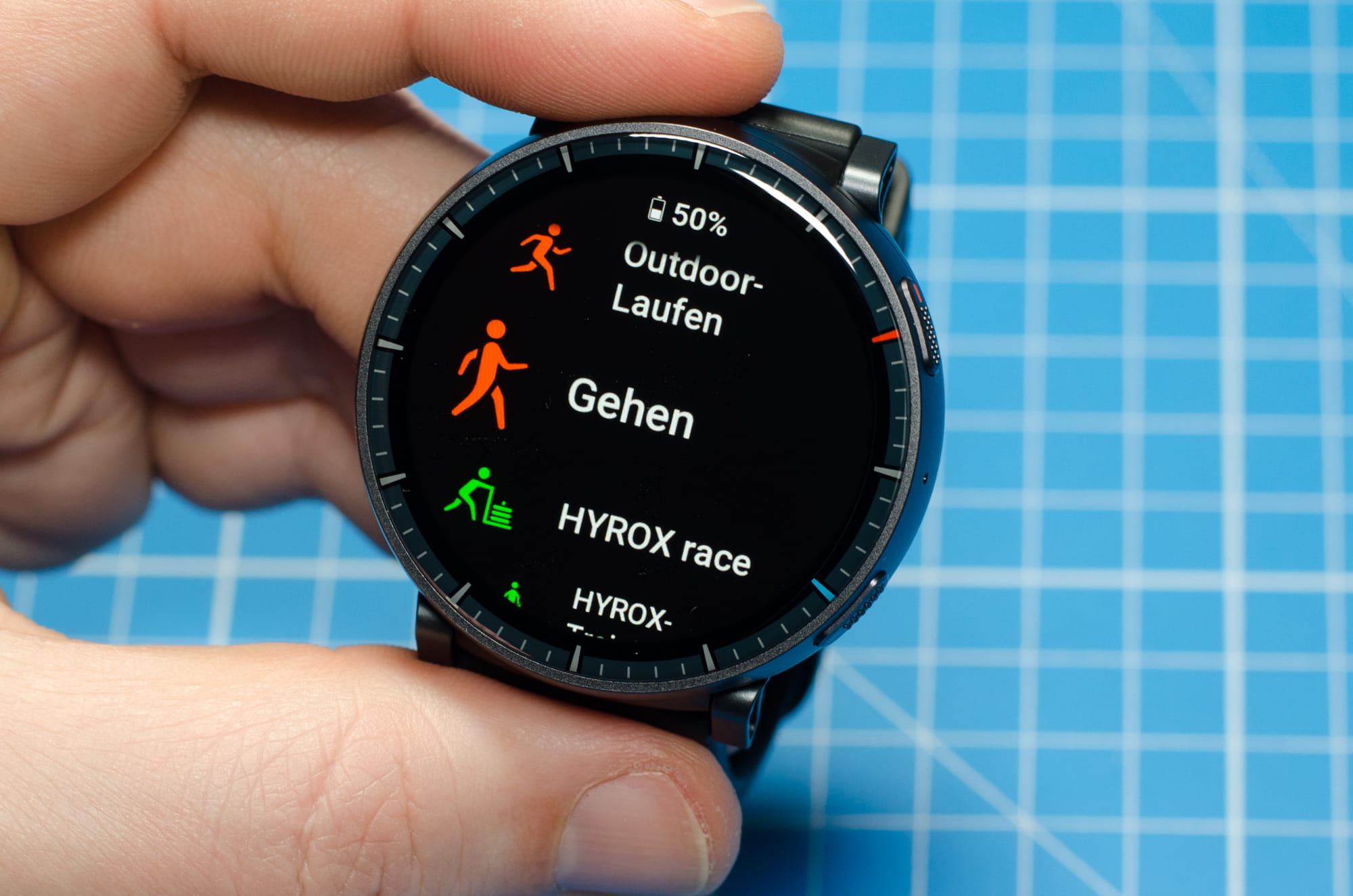
Sports app: selecting a sport profile
Selecting a sport applies sport-specific settings at first. These include goals (e.g. distance, duration, calories), alerts (lap times, max heart rate), and data page configuration. While there’s no rocket science involved, the options are extensive and approach what’s typically found only on much more expensive sports watches.
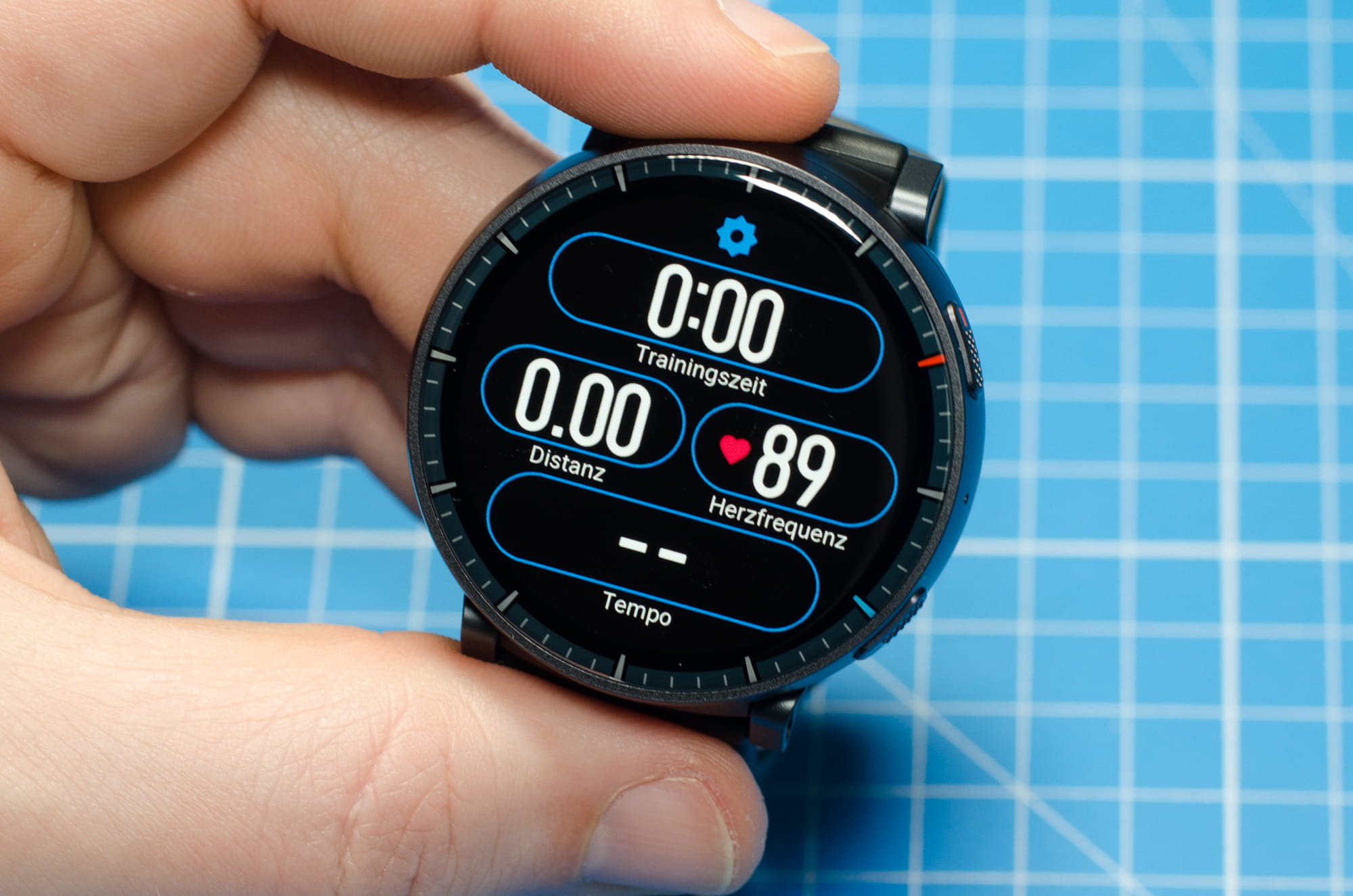
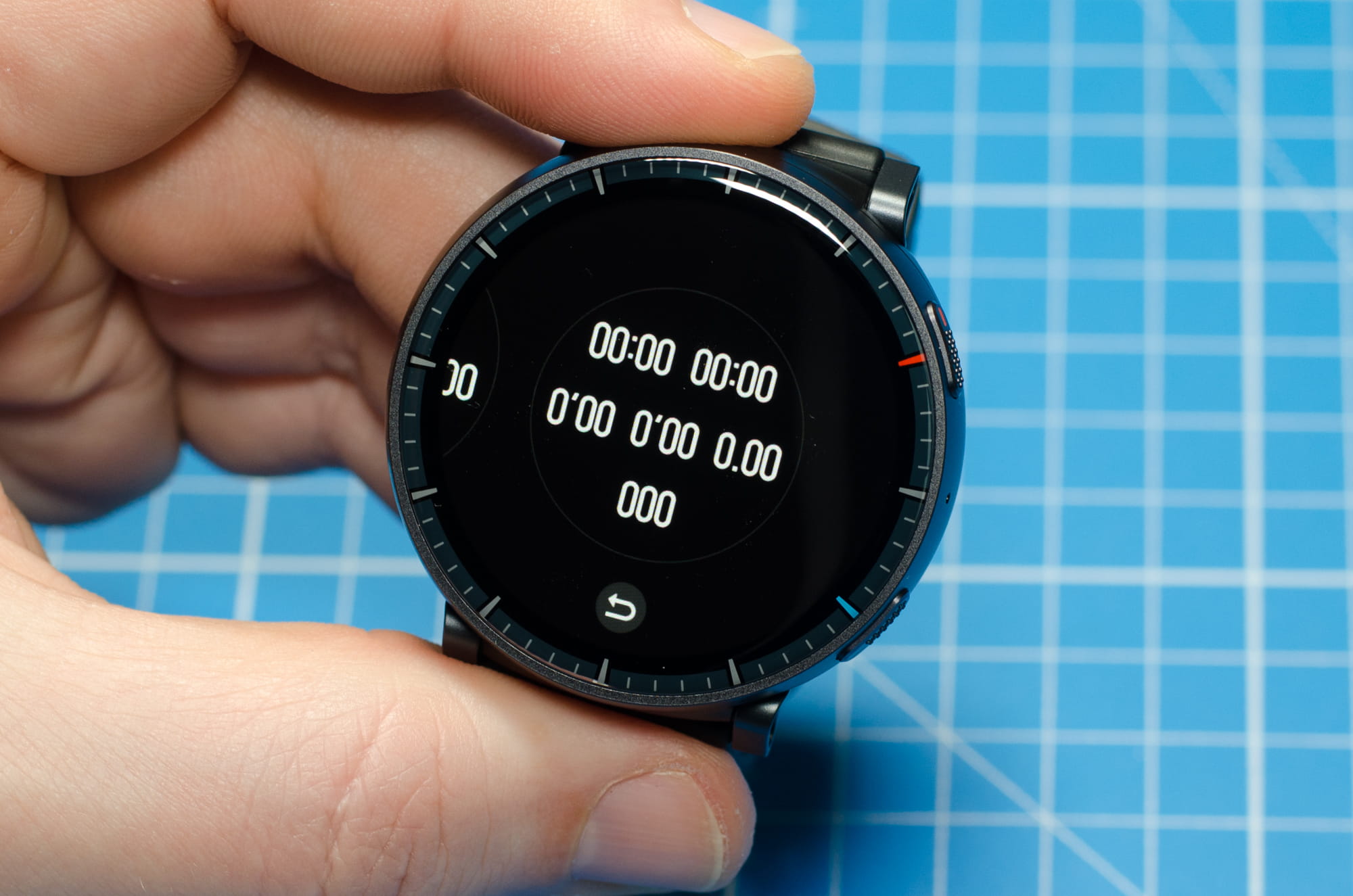
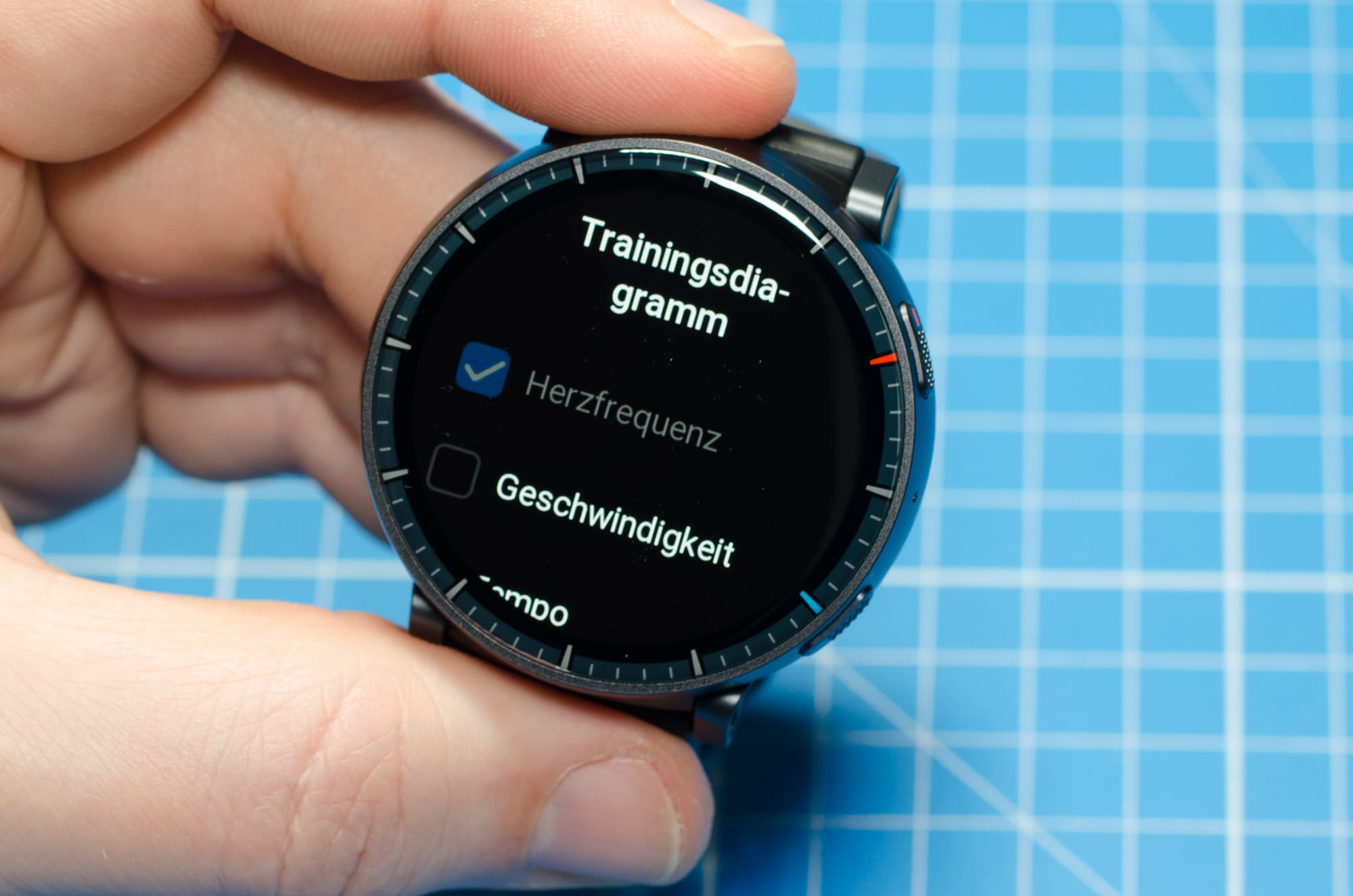
In short, selecting a sport serves two purposes:
- Choosing a profile for documenting your activities
- Applying predefined settings
For selected sports, training templates can be created in the app and used on the watch. Interval workouts can be created directly on the watch.
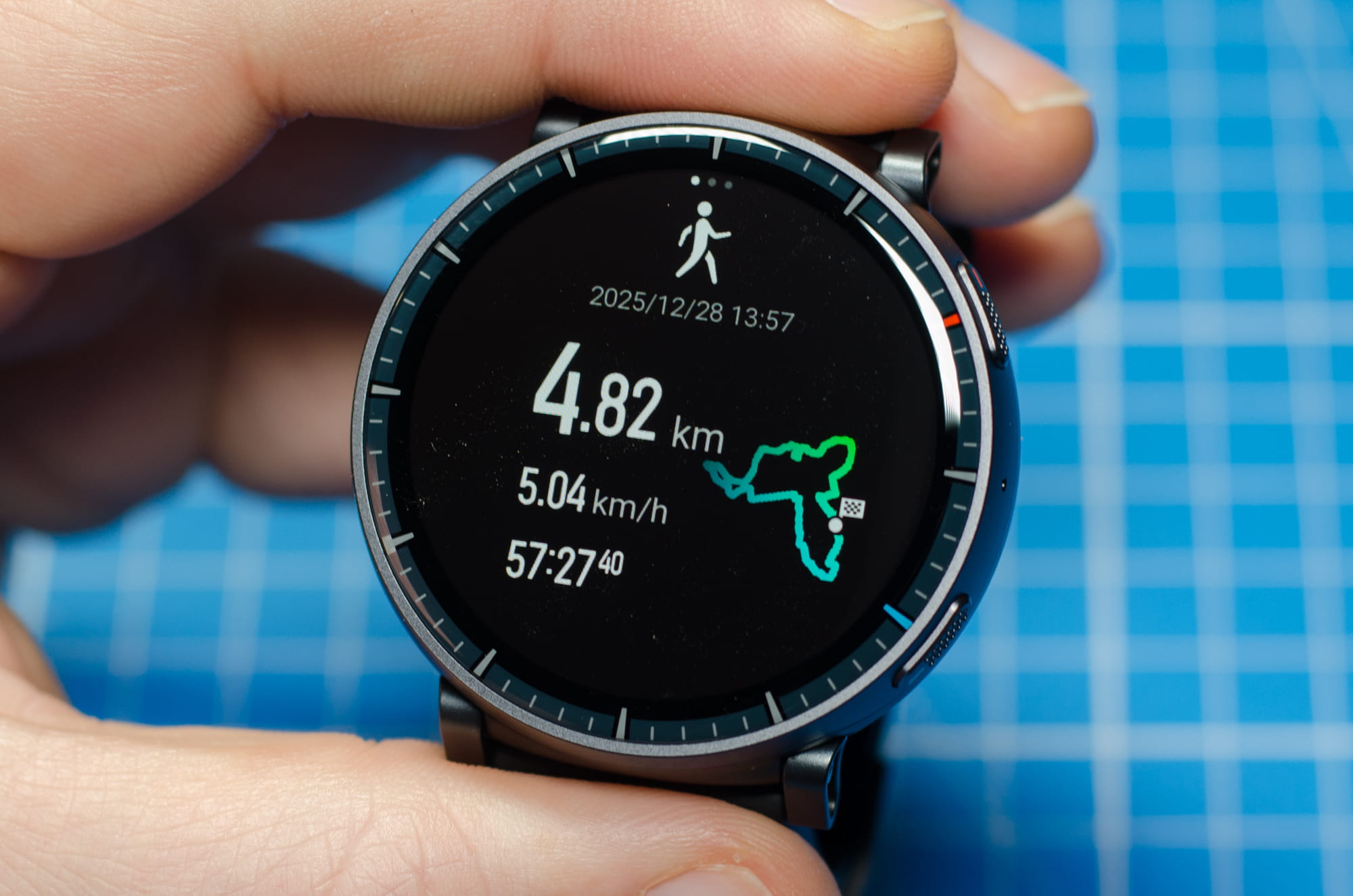
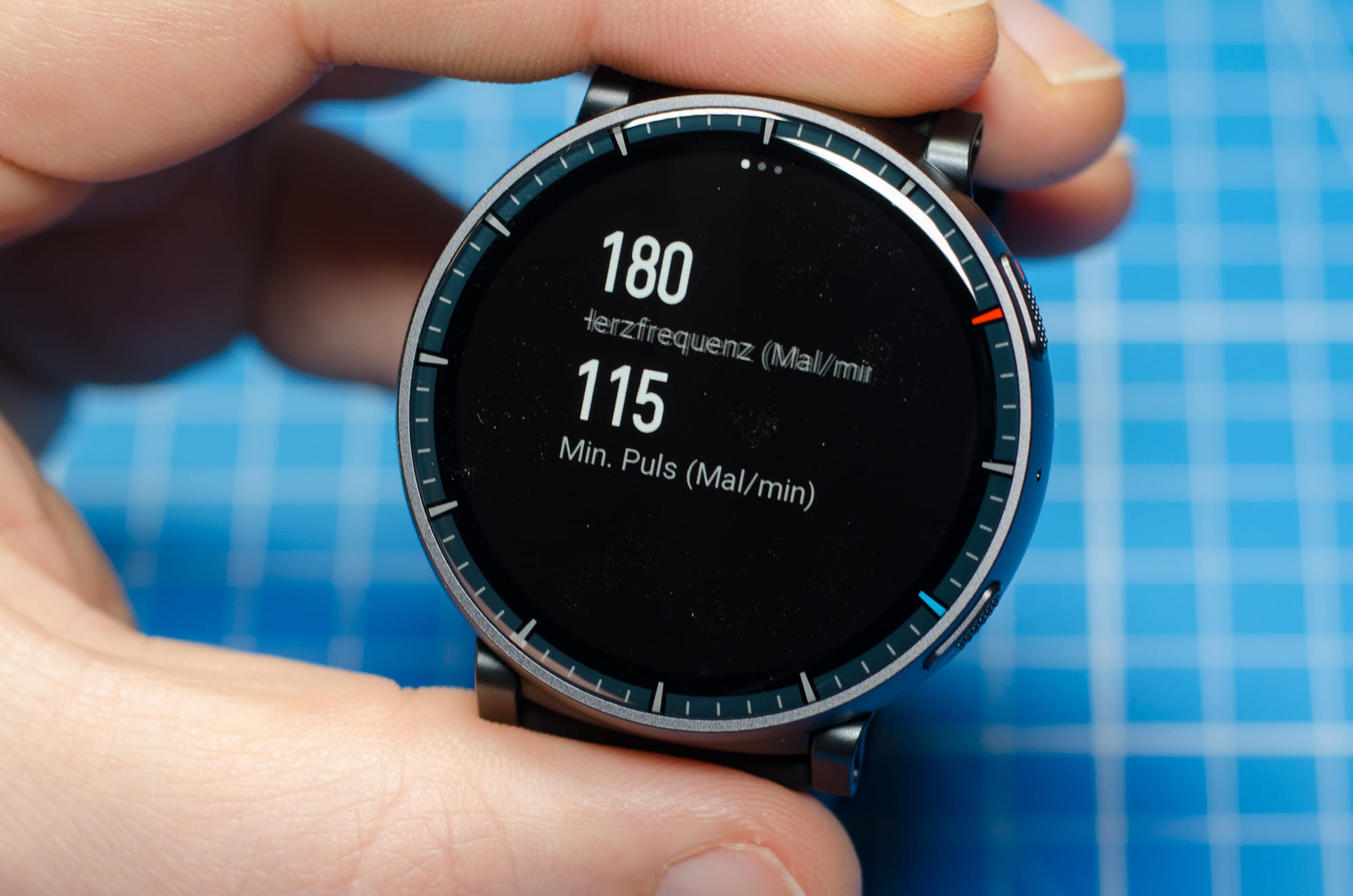
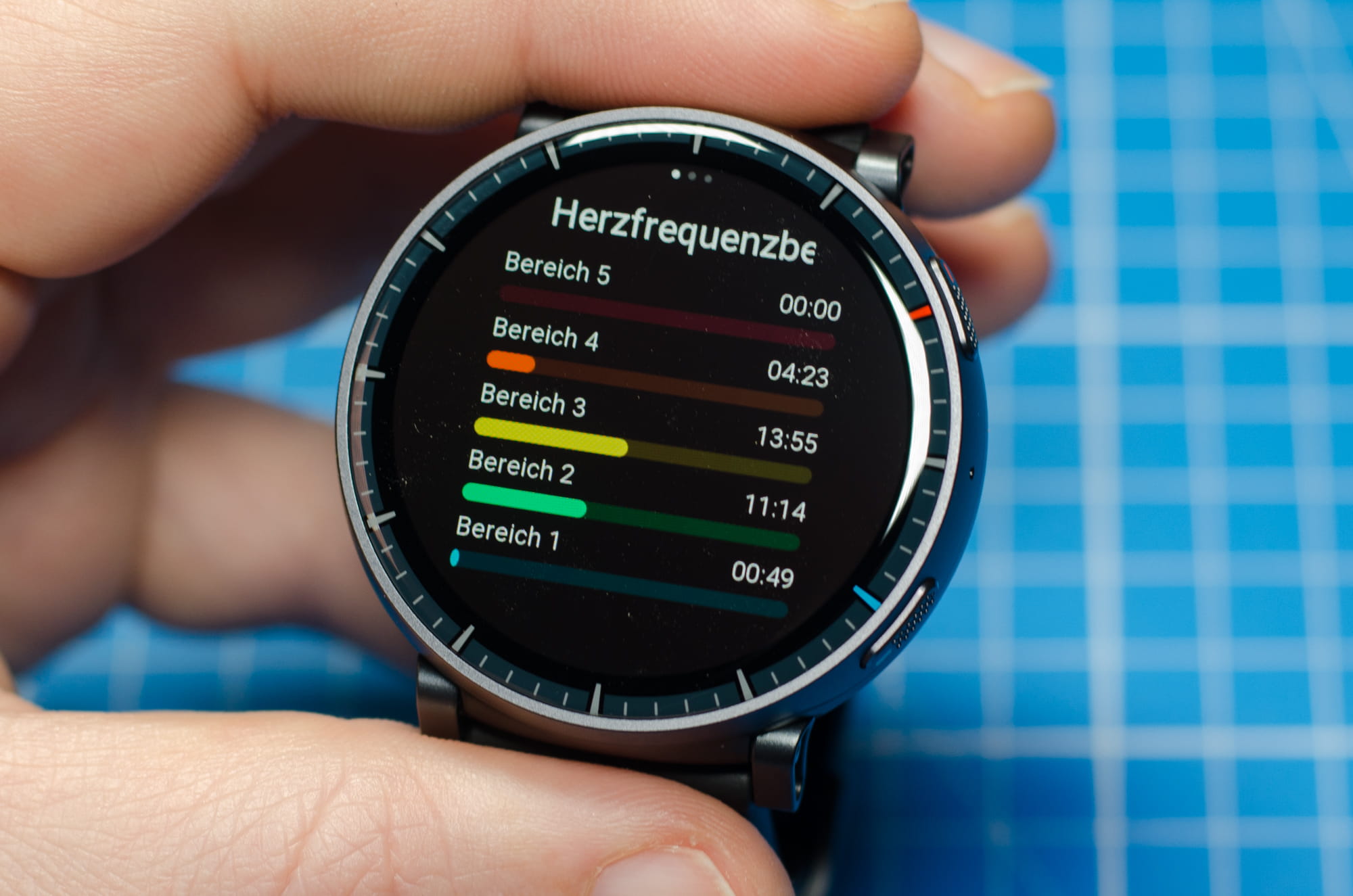
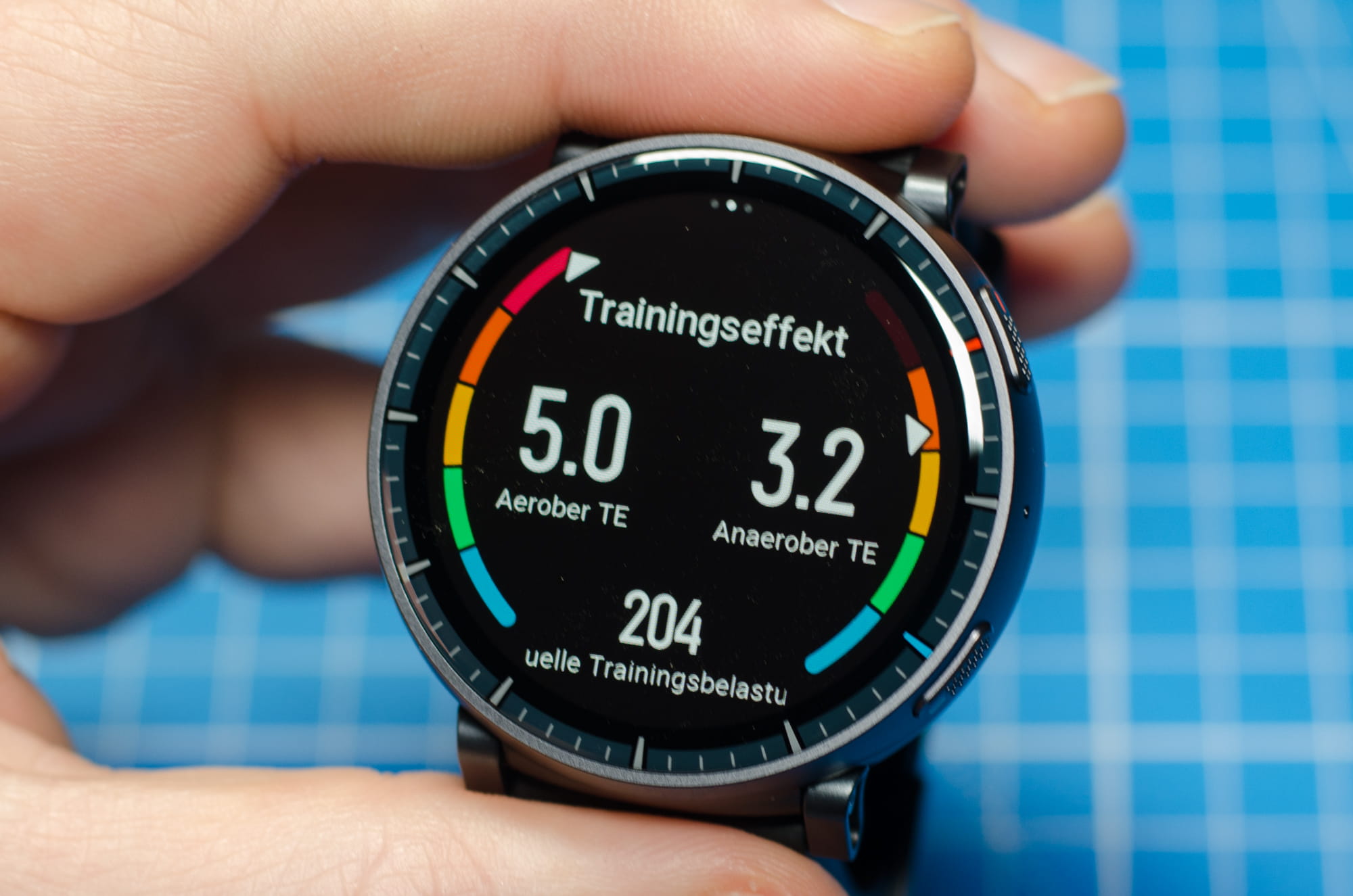
After finishing an activity, the data can be reviewed both on the watch and in the app.
GPS accuracy
For most outdoor sports, the Active Max records location using various GNSS systems (Global Navigation Satellite System, e.g. GPS, GLONASS, Galileo). This allows it to determine both route and pace.
It usually takes only 15–30 seconds for the watch to acquire satellite signals, making the Active Max one of the faster devices in this regard.
One thing to keep in mind: unlike higher-priced models, the Active Max uses only the L1 frequency band. In challenging environments, positioning may be less accurate than with dual-band GPS, which uses both L1 and L5.
To get an impression of performance, I ran around Potsdamer Platz in Berlin and through the Tiergarten. Tall buildings and narrow streets provide plenty of challenges, while the open sky in the Tiergarten offers fewer obstacles during winter.
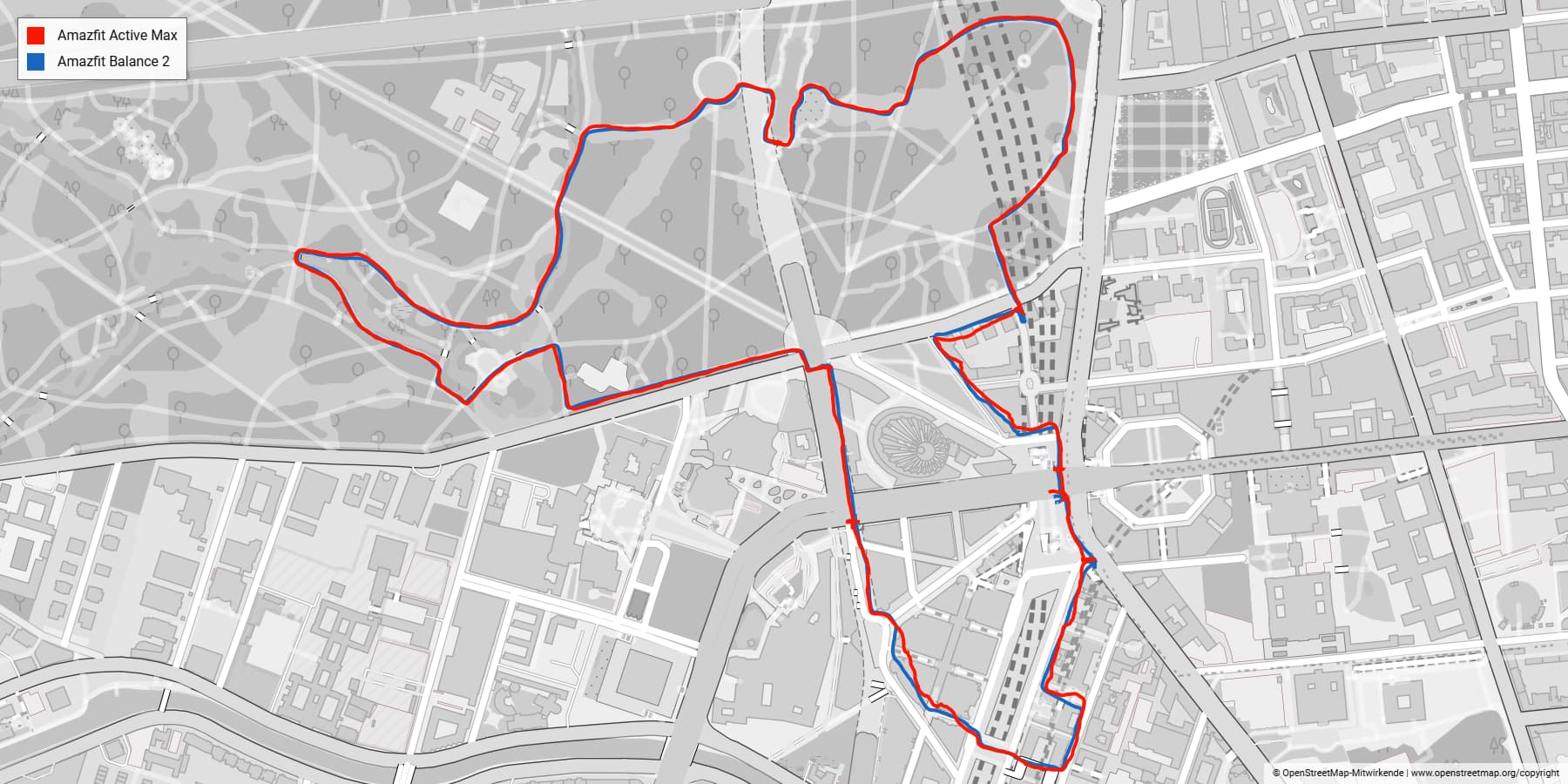
Route comparison at Potsdamer Platz and Tiergarten
From a high-level view, the comparison between the Active Max and Balance 2 looks fairly unremarkable. Only on closer inspection does the lack of dual-band GPS become apparent. Narrow streets and proximity to tall buildings put the Active Max under stress. The route appears noticeably more erratic, even when going straight. The Balance 2, by contrast, handles the situation much better.
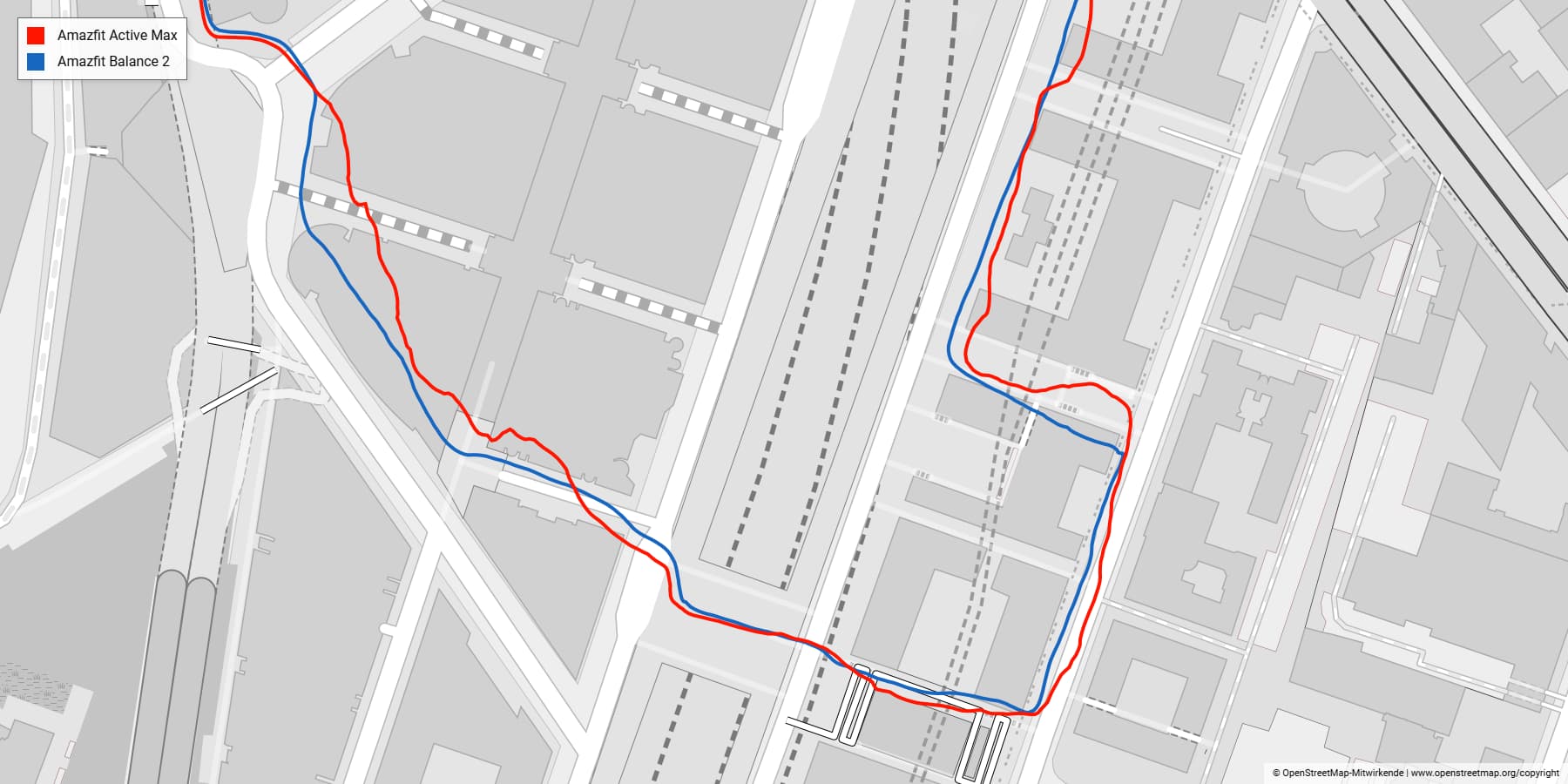
Suboptimal path tracking between tall buildings 1/2
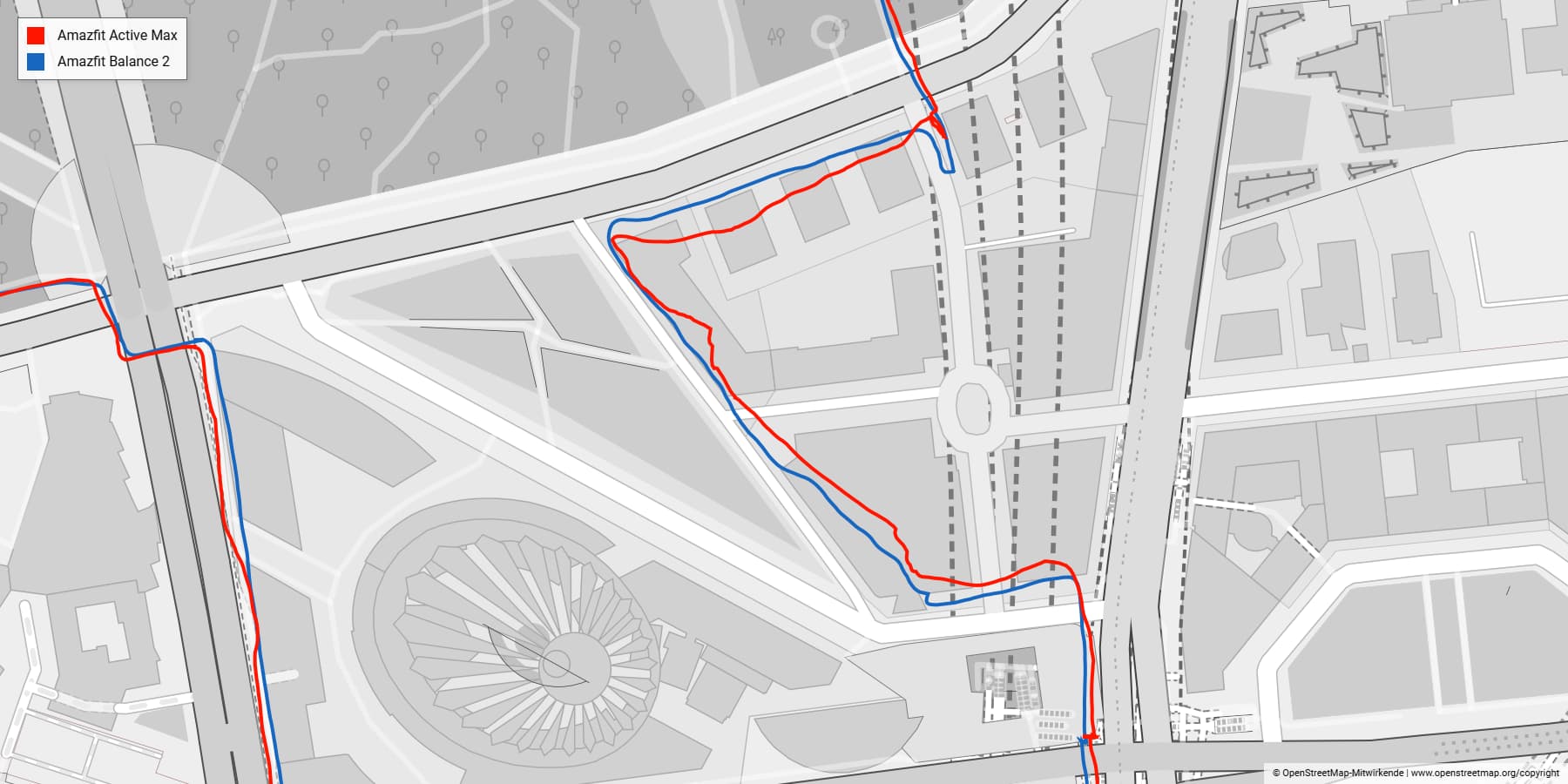
Suboptimal path tracking between tall buildings 2/2
In open terrain, the Active Max performs significantly better again. The cleaner path tracking still goes to the Balance 2.
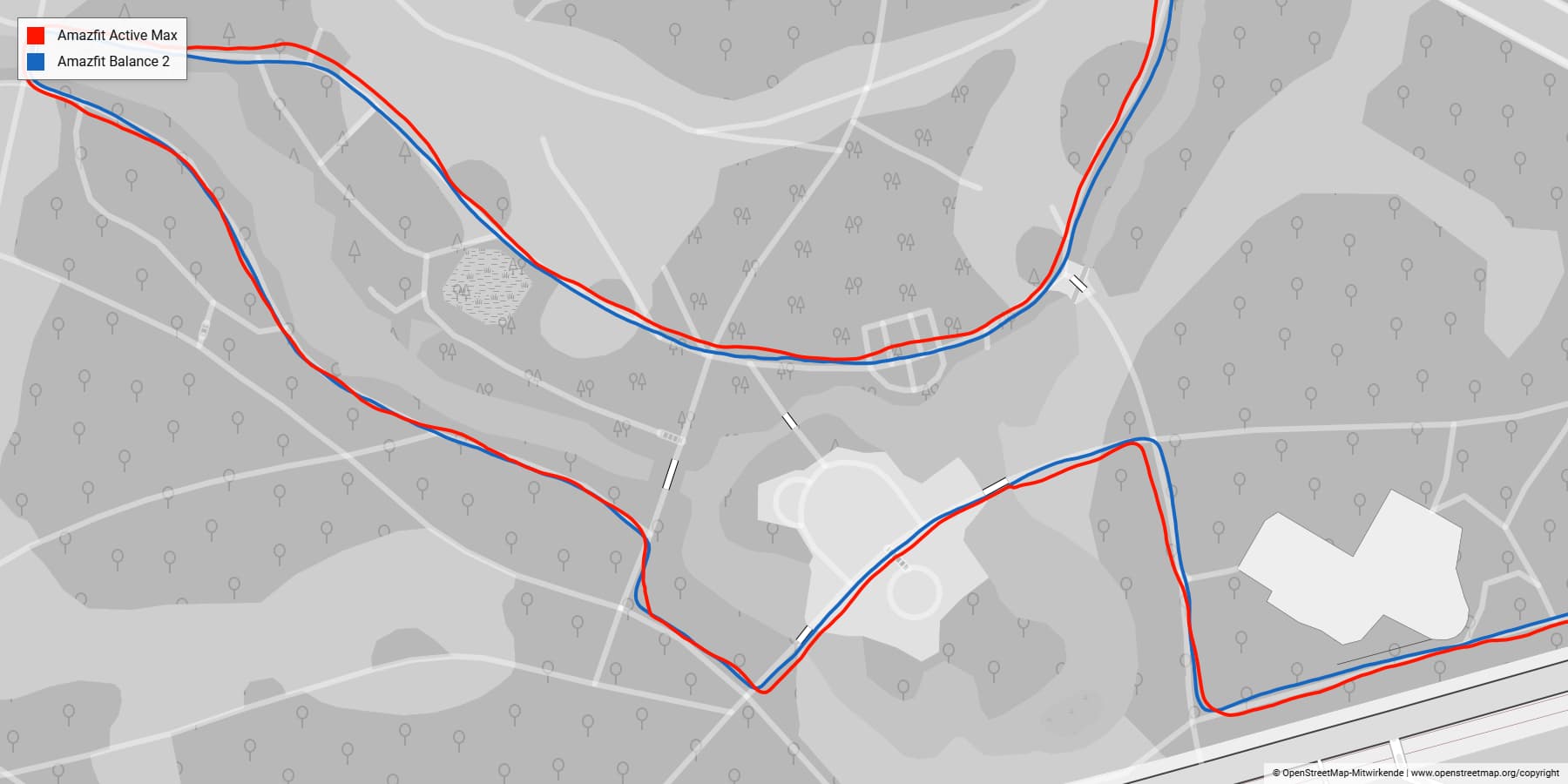
Minimal deviations in open terrain
To put things into perspective: the Active Max is no worse than other watches with single-band GPS. For comparison, I also brought along the aging Garmin Forerunner 245.
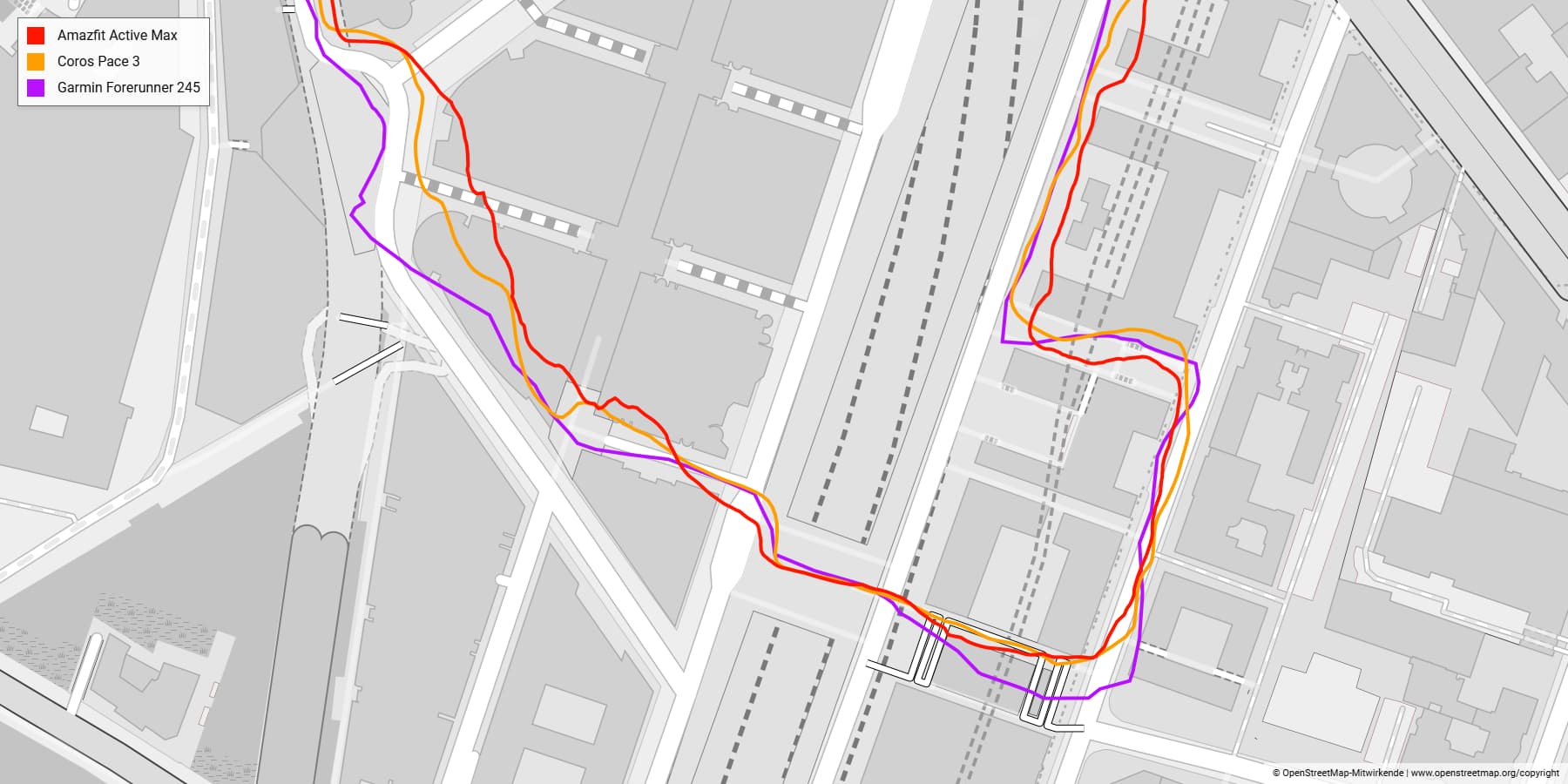
Comparison with Garmin Forerunner 245 and Coros Pace 3
It, too, struggles with the environment, and even a Coros Pace 3 — which supports L1/L5 — can wobble under these conditions.
Because the Active Max sometimes cuts corners but also records occasional detours, total distance values end up being surprisingly close.
| Amazfit Active Max | Amazfit Balance 2 | Coros Pace 3 | Polar Vantage V3 | |
|---|---|---|---|---|
| Strecke (in km) | 4,80 | 4,82 | 4,85 | 4,74 |
Considering the attractive price and the compromises that come with it, the performance of the Active Max is still very good.
Heart rate accuracy
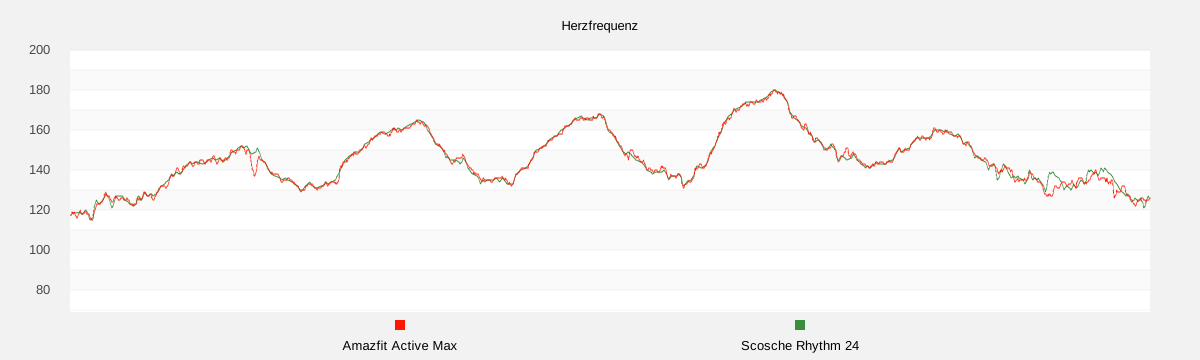
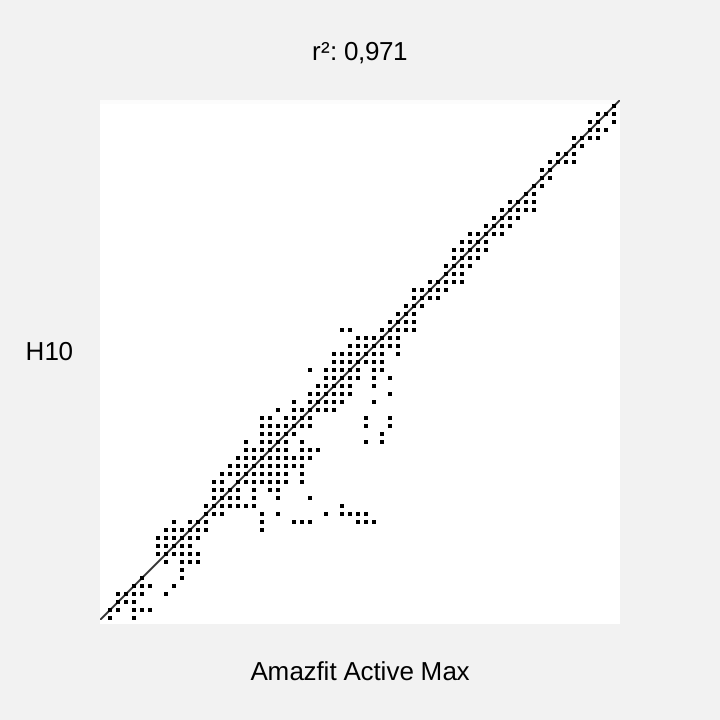
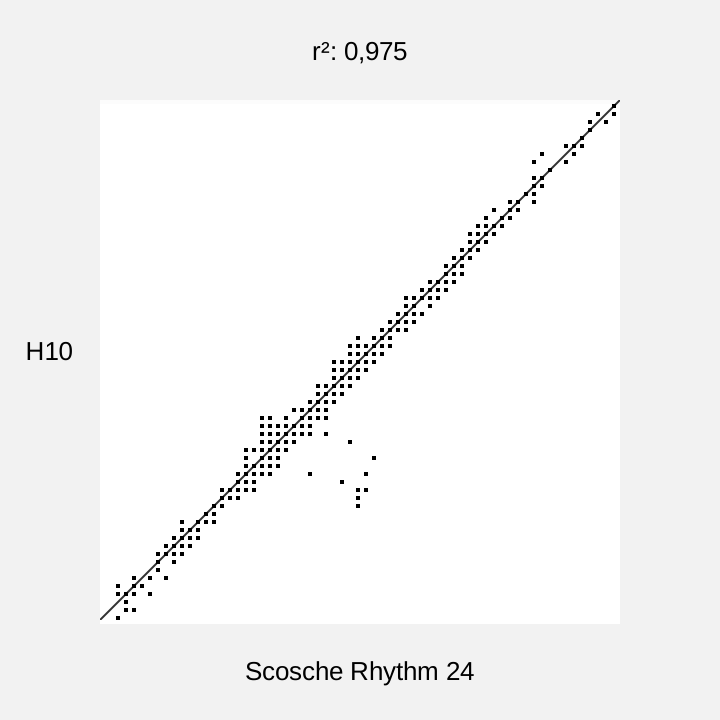
Alongside GPS accuracy, heart rate accuracy often makes or breaks a sports watch. To assess this, I compared the Active Max with the Polar H10 chest strap, widely regarded as one of the best HR monitors. To validate the results, I also measured heart rate using the Scosche Rhythm 24 and the Polar Verity Sense.
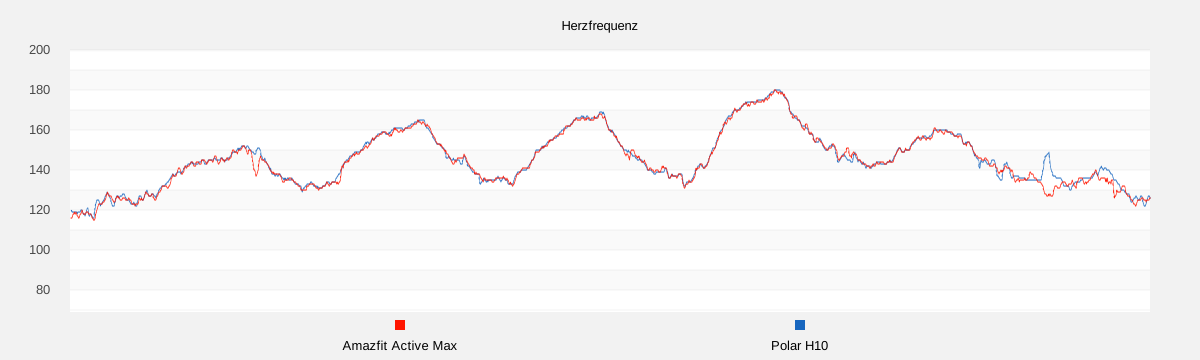
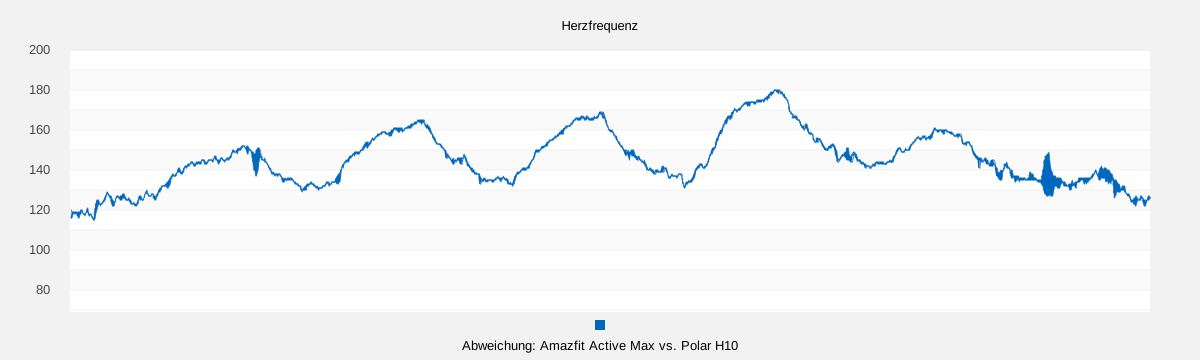
The results show that the PPG sensor of the Active Max performs at a high level. No major differences compared to the chest strap or the two optical arm straps are apparent.
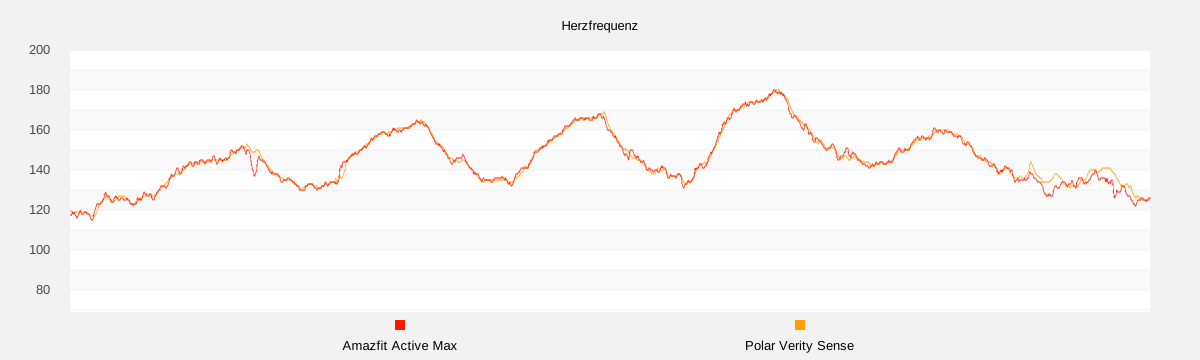
The coefficient of determination, which uses the Polar H10 as a reference and evaluates how closely the other devices follow it, confirms the strong results.
Battery life
Alongside the display and feature set, battery life is one of the major strengths and improvements of the Active Max. With up to 25 days, the watch is a true endurance runner.
| Active Max | Active 2 | Balance 2 | |
|---|---|---|---|
| Akkulaufzeit - Typisch | 25 days | 10 days | 21 days |
| Battery life - GPS | 64 hours | 21 hours | 33 hours |
Note: Be careful when comparing GPS battery life, as the Balance 2 operates under different conditions (e.g. dual-band GPS).
As with the competition, these impressive figures are achieved through a few trade-offs:
- Heart rate is measured every 5 minutes during daily use by default, but this can be reduced to a 1-minute interval. Only then do alerts for excessively high or low heart rate become active.
- Blood oxygen saturation measurement is disabled by default.
Monitoring all vital metrics, activating the always-on display, higher brightness, or intensive use all take a toll on battery life.
For me, what matters most is that even with intensive use and the occasional workout, I can easily get through a full week. The Active Max manages this without any problems, allowing me to recharge it over the weekend using the small magnetic USB charging cradle.
And even if I miss my usual 7-day charging cycle, I can simply top it up in the following days—the watch provides enough buffer in most cases.
Who is the Active Max for?
The target audience of the Active Max largely overlaps with that of the Active 2. It includes anyone who wants to lead a more active lifestyle or get back into sports without chasing a personal best every single time. The real opponent here is the inner couch potato. Advanced running metrics and detailed load/recovery analysis are not the main focus.
For that purpose, the performance of the Active Max is more than sufficient — better still, the watch leaves little to be desired, both in sports and everyday use.
Amazfit Active Max - Verdict

- detailled offline maps
- bright AMOLED display
- superb price
- no wi-fi
- no dual-band GPS
- no music playback (MP3)
There’s no question that the Active 2 was the undisputed price-performance champion of the first half of the year. No other smartwatch offered more features for the crazy price of just €99.
At €169, the Active Max is significantly more expensive, raising the question of whether the moderate increase in features (e.g. BioCharge, maps, podcasts) and hardware improvements (display size, battery life) justify the €70 surcharge. If someone asked me that question directly, my answer would be “No”.
That said, the price-performance ratio of the Active Max is still very, very good. In my opinion, the real issue is that the Active 2 entered the market at an unusually low price. Even €119 would have been attractive for the Active 2, making the price increase for the Active Max far less noticeable.
Looking purely at the balance between price and performance, the Active Max is an appealing watch for sports-minded users and those who want to become one.
Amazfit Active Max
AMOLED
480 x 480 pixels
320 PPI
max. 3,000 Nits
56 g (with strap)
Rating
Features
Features
Click for more information
Activity Tracking | |
| Steps | |
| Calories | |
| Floors | |
| Sleep | |
| Stress | |
| Inactivity alert | |
| Dynamic target | |
Information | |
| Time / Date | |
| Notifications | |
| Weather | |
| Calendar | |
| Find phone | |
Music | |
| Remote control | |
| Playback via BLE | |
Phone calls | |
| Calls (direct) | |
| Calls (via Bluetooth) | |
Sport programs / features
Click for more information



Sensors
Click for more information
| Acceleration / Gyroskop | |
| PPG / Heart rate | |
| Altimeter | |
| Compass | |
| Skin temperature | |
| Temperature | |
| ECG |
Location services
Click for more information
| GPS | |
| GPS (Multiband) | |
| Galileo | |
| GLONASS | |
| BeiDou | |
| QZSS | |
| Live tracking |
Connectivity
Click for more information
| Bluetooth LE | |
| ANT+ | |
| Wi-Fi | |
| NFC | |
| LTE |
Other
Click for more information
| Interchangeable wristband |

I am the creative mastermind behind this page, with a passion for both sports and technology. By combining these interests, I write about wearables and gadgets that can enhance your sports experience. As a regular consumer, I offer insights from the perspective of a genuine user.
You can learn more about me and this site here.